Call Now: (954)-479-2040 for 24/7 Towing


How Accident Recovery Works: Process, Equipment & Safety
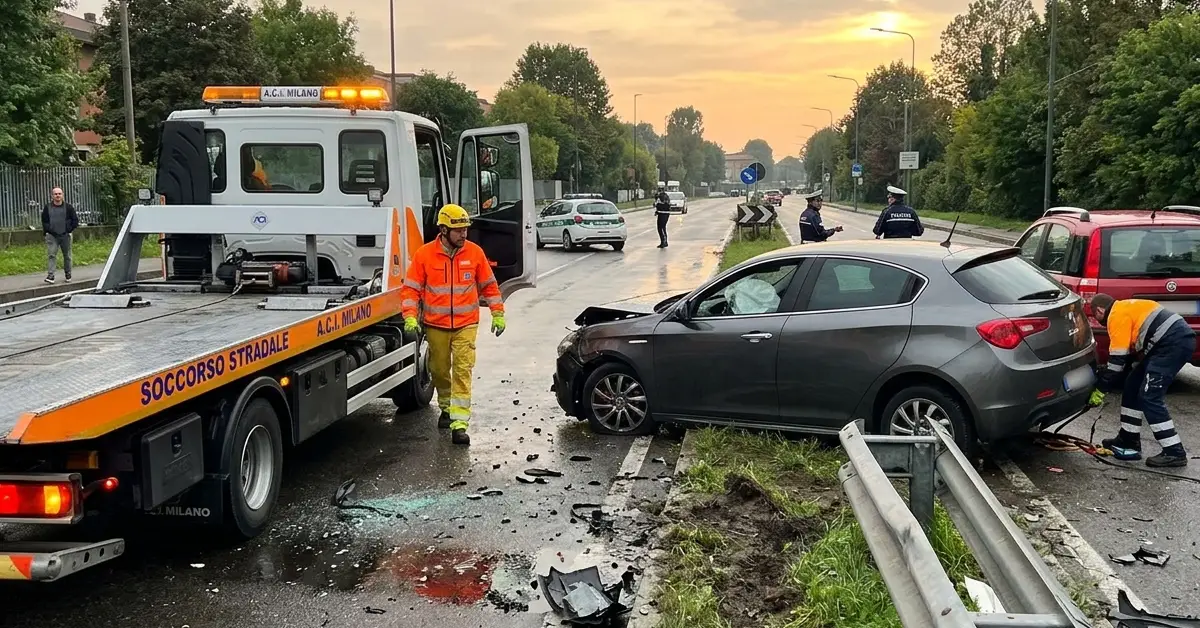
Accident recovery is the process of assessing, extracting, stabilizing, and transporting a vehicle damaged in a collision or stranded in a hazardous position. A professional accident recovery operator evaluates the accident scene, selects suitable recovery equipment, moves the vehicle to a safe position, and arranges transportation to a repair garage, storage facility, or another agreed destination.
The process depends on the vehicle's condition, its position, road hazards, and the equipment required. A vehicle resting on its wheels usually requires a different recovery method from an overturned car, a vehicle trapped in a ditch, or a badly damaged vehicle blocking traffic.
What is Accident Recovery?
Accident recovery is a roadside vehicle recovery service that removes damaged, disabled, or immobilized vehicles from accident scenes. The service includes scene assessment, vehicle extraction, repositioning, stabilization, and transportation when ordinary towing alone is insufficient.
Accident recovery and accident towing are related but different services. Vehicle recovery focuses on safely removing or repositioning a vehicle, while towing focuses on transporting it to another location. A single incident often requires both services.
For example, a car that has slid into a roadside ditch may need winching before a tow truck can transport it. An overturned vehicle may require specialized recovery equipment to return it to an upright position before loading or towing.
How Does Accident Recovery Works?
Accident recovery works by assessing the accident scene, securing the area, stabilizing the damaged vehicle, selecting the appropriate recovery method, extracting the vehicle, and transporting it to a safe destination. The exact process depends on the vehicle’s condition, its position, the severity of the damage, and the hazards surrounding the accident.
The steps involved in the accident recovery process include:
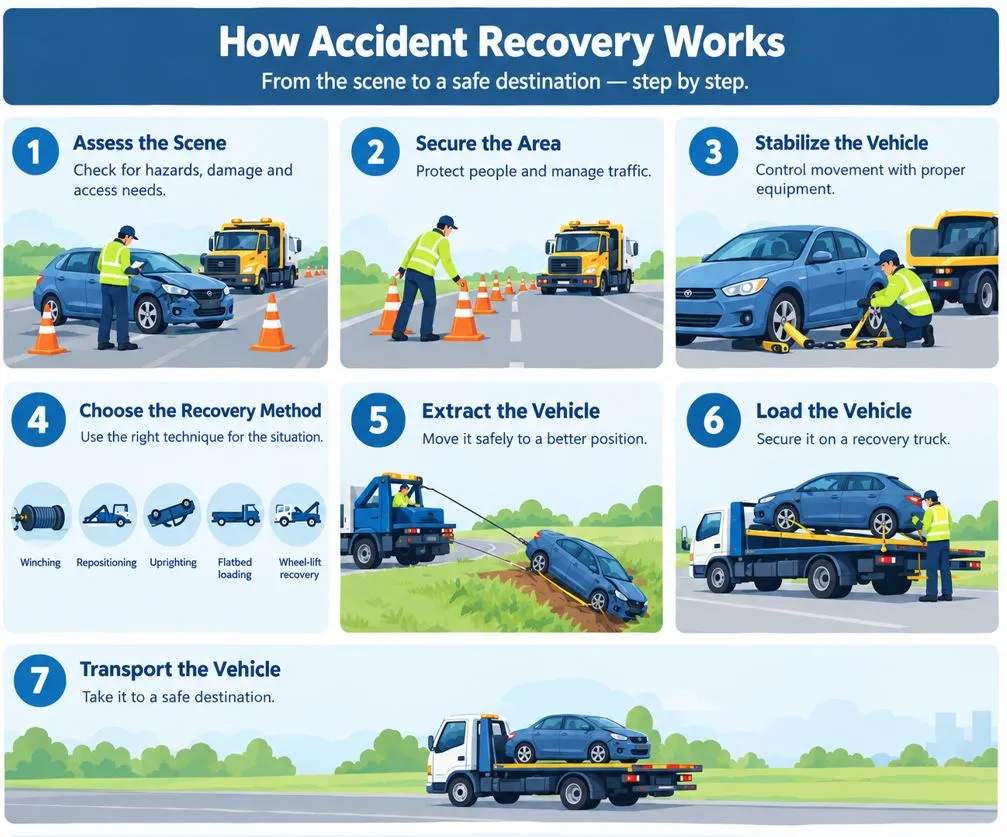
Assess the Accident Scene
Secure the Area
Stabilize the Damaged Vehicle
Choose Appropriate Recovery Method
Extract the Vehicle
Loading the Vehicle
Trasporting Vehicle to Safe Location
Step 1: Assess the Accident Scene
The first step in accident recovery is assessing the scene to determine whether the vehicle and surrounding area can be approached safely. A recovery operator evaluates the location, vehicle damage, traffic conditions, and potential hazards before choosing how to recover the vehicle.
During the assessment, the operator checks:
Vehicle position: Whether the car is upright, overturned, trapped in a ditch, off the road, or blocking traffic.
Visible damage: Whether the wheels, suspension, steering, body structure, or other components appear damaged.
Environmental hazards: Whether there is smoke, fire, leaking fuel, unstable ground, or damaged electrical equipment.
Road and traffic conditions: Whether passing traffic, poor visibility, or limited working space creates additional risks.
Recovery access: Whether a standard tow truck can reach the vehicle or specialized recovery equipment is required.
Step 2: Secure the Area
After assessing the scene, the recovery team takes appropriate precautions to protect the vehicle occupants, recovery workers, and other road users.
Depending on the location and circumstances, these precautions may include:
Positioning the recovery vehicle to provide a safe working area.
Using warning lights, cones, or other traffic-management measures where appropriate.
Keeping people away from moving traffic and the recovery equipment.
Identifying hazards such as leaking fluids, unstable vehicles, or damaged electrical components.
Waiting for emergency responders or traffic authorities to make the scene safe when necessary.
Step 3: Stabilizing the Damaged Vehicle
Before moving the vehicle, the operator determines how to control its movement during extraction and loading. Stabilization is particularly important when the vehicle is overturned, resting on uneven ground, or severely damaged.
The operator evaluates the vehicle’s weight distribution, ground contact, damaged components, and suitable equipment attachment points.
Depending upon the situation, the team may use:
Wheel restraints or suitable securing devices.
Rated recovery straps and rigging.
Winches and compatible recovery equipment.
Specialized stabilization systems for complex recoveries.
Step 4: Choosing Appropriate Recovery Method
The next step is selecting a recovery method that matches the vehicle’s position, condition, and accessibility. Not every accident requires the same equipment or procedure. The table below explains the proper recovery method in an accident scenario:
| Recovery Method | When It Is Used | How It Works |
|---|---|---|
| Winching | The vehicle is stuck in a ditch, mud, or another difficult position. | A suitable winch and rigging pull the vehicle toward a safer position. |
| Repositioning | The vehicle is immobilized or awkwardly positioned. | Recovery equipment moves it into a suitable position for extraction or loading. |
| Vehicle Uprighting | The vehicle is resting on its side or roof. | Specialized equipment controls the movement as the vehicle is returned upright. |
| Flatbed Loading | The vehicle needs secure transportation. | The vehicle is loaded onto a flatbed platform. |
| Wheel-Lift Recovery | The vehicle is suitable for this towing method. | A compatible system lifts one end of the vehicle for transport. |
Step 5: Extract the Vehicle
Vehicle extraction is the stage in which the recovery team moves the damaged vehicle from its original position to a safer, more accessible location. Modern vehicle recovery adapts directly to the terrain and situation. When retrieving vehicles from ditches or heavy mud, teams first assess ground resistance and deploy specialized rigging to execute a controlled pull toward stable ground.
Overturned vehicles are managed by trained specialists using equipment that maintains strict control throughout the uprighting process. Additionally, in scenarios where a vehicle impedes traffic, the team swiftly coordinates scene safety and regulatory permissions to reposition or remove the obstruction, restoring safe roadway flow.
Step 6: Load the Vehicle on to Recovery Truck
Once the vehicle has been extracted, the recovery operator determines how to load it for transportation. A flatbed truck is commonly used when a vehicle has significant collision damage or should not be towed with its wheels on the road. If the vehicle has damaged wheels, steering, suspension, or structural components, the operator must account for those conditions when loading and securing it.
Step 7: Transport the Vehilce to Safe Destination
After the vehicle has been secured, the operator transports it to the agreed destination. The destination depends on the vehicle’s condition, the owner’s instructions, and any arrangements with an insurer or roadside assistance provider. Before transport, the owner or authorized person should confirm the destination and clarify any applicable recovery, transport, or storage charges when circumstances permit.
What Happens After Accident Recovery?
After accident recovery, the vehicle is delivered to the agreed destination for inspection, repair, storage, or further assessment. The recovery operator's role generally ends with the agreed recovery and transportation service, unless additional services are included in the arrangement.
The next steps depend on the extent of the collision damage. A repair facility inspects affected components and determines whether the vehicle requires bodywork, mechanical repairs, electrical diagnostics, or further safety checks.
The owner should also document the incident and retain relevant records, such as recovery invoices, the vehicle's destination, and information provided by the operator. If an insurance claim is involved, the insurer may require photographs, estimates, or an inspection before authorizing repairs.
A vehicle that appears to have only cosmetic damage is not necessarily safe to drive. Damage to the steering, suspension, brakes, wheels, or safety systems requires appropriate inspection before the vehicle returns to the road.
Who Pays for Accident Recovery?
The person or organization responsible for accident recovery costs depends on the insurance policy, the circumstances of the collision, and applicable local rules. Payment may involve the vehicle owner, an insurer, a roadside assistance provider, or another responsible party.
The factors that affect the final cost of accident recovery are:
Recovery complexity: Extracting an accessible vehicle generally requires less specialized work than recovering an overturned vehicle or one trapped off-road.
Equipment requirements: A complex operation may require a winch-equipped truck, a heavy recovery vehicle, or additional personnel.
Transportation distance: The distance to the repair garage, storage facility, or other destination affects the transport charge.
Additional services: Winching, specialized extraction, after-hours dispatch, and vehicle storage may involve separate charges.
What Should You Do While Waiting for Accident Recovery?
While waiting for accident recovery, prioritize personal safety, follow emergency responders' instructions, and provide the operator with accurate information about the vehicle's location and condition.
Move to a safe location: Stay clear of moving traffic and follow emergency personnel's directions. Do not stand between damaged vehicles or near an unstable vehicle.
Report immediate hazards: Inform emergency services about injuries, fire, smoke, fuel leaks, or other urgent dangers.
Describe the vehicle's position: Tell the recovery provider whether the vehicle is upright, overturned, off-road, blocking traffic, or unable to roll.
Confirm recovery details: Provide the exact location, vehicle type, visible damage, and preferred destination when it is safe to do so.
How Long Does Accident Recovery Take?
Accident recovery time depends on vehicle damage, accessibility, traffic conditions, and equipment requirements. A straightforward tow is generally faster than extracting a vehicle from a ditch or recovering an overturned vehicle.
What Is the Difference Between Accident Recovery and Towing?
The main difference between accident recovery and towing is that accident recovery removes or repositions a damaged or immobilized vehicle, while towing transports it to another location. Complex incidents often require recovery before the vehicle can be towed safely.
Can a Damaged Car Be Towed After an Accident?
Yes, a damaged car can be towed if the recovery method suits its condition. Vehicles with damaged wheels, steering, suspension, or structural components often require flatbed transportation or specialized recovery equipment.
Does Accident Recovery Include Vehicle Repairs?
No, accident recovery generally covers vehicle extraction and the agreed transportation service. Mechanical repairs, collision repairs, and insurance assessments are separate services unless specifically included in an arrangement.
What Happens If a Car Is Too Damaged to Tow Normally?
A severely damaged vehicle requires an assessment by a qualified recovery operator. The operator selects specialized extraction, lifting, or loading equipment based on the vehicle's condition and the safety of the recovery scene.
Baptiste Towing and Transport is a top-rated towing company in Broward County, ready to assist you at the accident scene and transport your vehicle to a safe location. We’re available 24/7, so give us a call whenever you need reliable towing and recovery services.
Baptiste Towing & Transport provides 24/7 towing, flatbed transport, vehicle recovery, and roadside assistance across Broward, Miami-Dade, and Palm Beach Counties.
Fort Lauderdale Location
Hollywood Location
Pompano Beach Location
Coconut Creek Location
COMPANY
Major Highways
I-95
I-75
I-595
SR 91
SR 869
© 2026. Baptiste Towing and Transport LLC. All Rights Reserved.