24/7 Emergency Line: 954-479-2040


5 Steps to Take If Your Vehicle Gets A Flat Tire
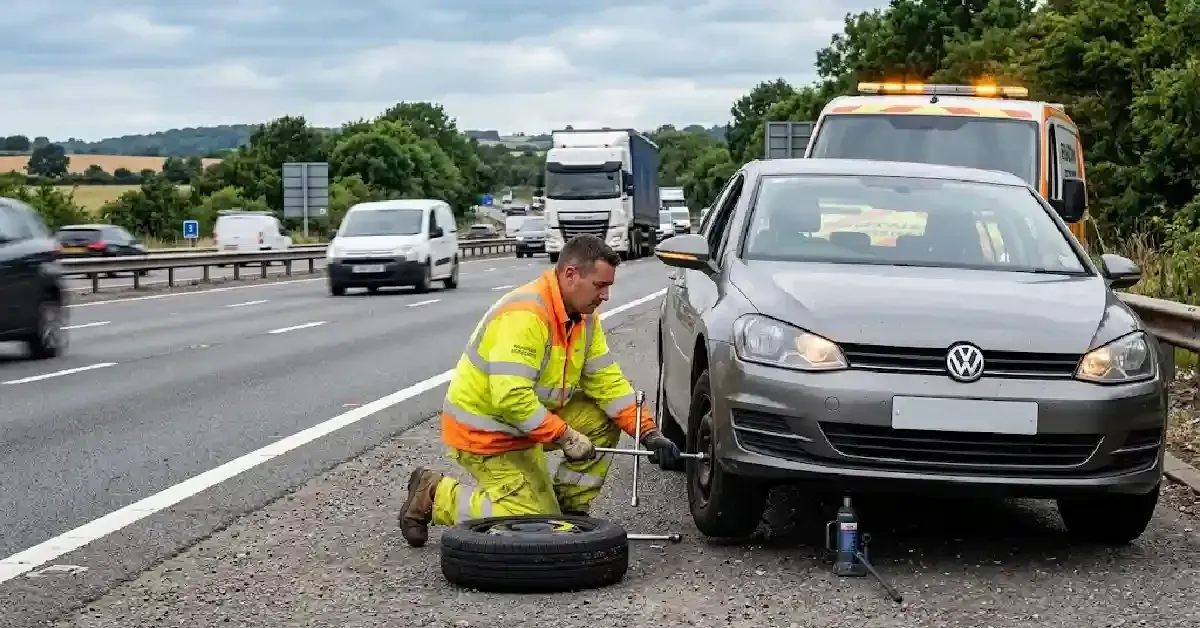
A flat tire is a sudden mechanical failure caused by a puncture, blowout, or valve stem damage that results in the complete loss of air pressure in an automobile tire. Drivers experiencing a flat tire must stay calm, turn on hazard lights, and pull over to park in a safe location with the parking brake engaged. Changing the tire using a jack, lug wrench, and spare tire allows the vehicle to return to motion, though checking tire pressure with a portable air compressor remains essential before driving. If changing the tire is not possible, calling roadside assistance provides on-site tire replacement or vehicle towing to a nearby tire repair facility. Drivers facing a flat tire at home or on a high-speed highway must prioritize safety to prevent secondary collisions and rim damage.
What Are The Steps to Take When You Get A Flat Tire?
The main steps to take when you get a flat tire are mentioned below.
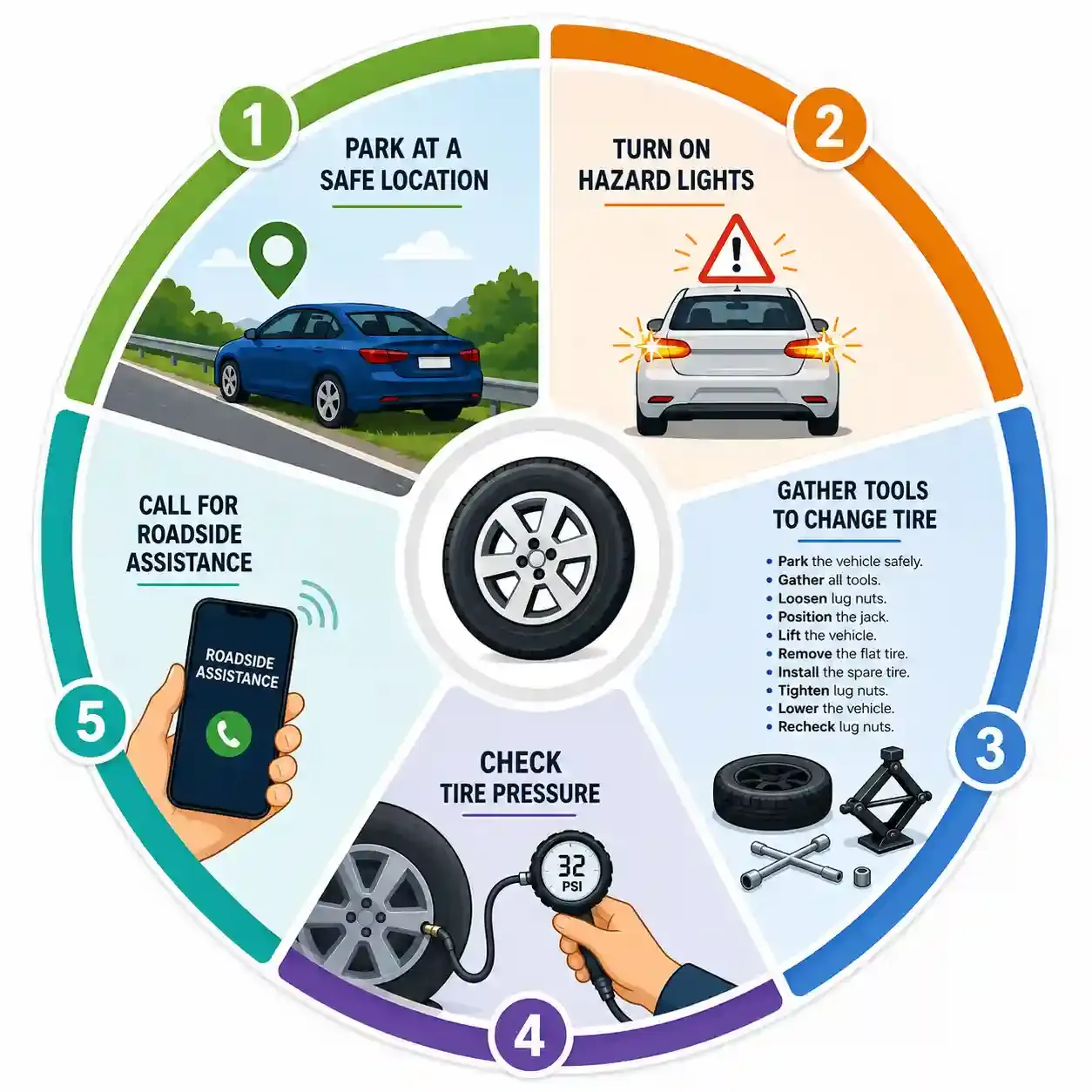
Step 1: Park Vehicle At Safe Location
To secure the vehicle after a tire fails, immediately pull over to a flat, hard, and safe surface away from moving traffic. Stop driving on the deflated wheel to prevent permanent rim and axle damage, and firmly set the parking brake to immobilize the car.
Step 2: Turn On Hazard Lights
Turn on your hazard lights immediately after recognizing a flat tire to activate the exterior flashing lights. These warning lights alert oncoming traffic to a stationary vehicle, maximizing visibility on busy shoulders or during nighttime emergencies.
Step 3: Gather Tools to Change Tire
Retrieve the necessary equipment from the vehicle trunk, including the jack, lug wrench, spare tire, and floor mat.
To replace the flat tire, follow the steps below:
Place the floor mat on the ground to maintain clean working leverage.
Loosen the lug nuts counterclockwise on the flat tire using the lug wrench before elevating the car, loosening the screws without removing them completely.
Position the jack beneath the vehicle chassis at the designated reinforced jack location specified in the owner's manual.
Lift the vehicle off the ground by cranking the jack until the flat tire clears the pavement.
Unscrew the loosened lug nuts fully from the wheel bolts.
Remove the flat tire with a firm, even pull to detach it from the wheel hub.
Mount the spare tire onto the wheel studs and tighten the lug nuts firmly by hand.
Lower the vehicle chassis to the ground using the jack, then fully torque the lug nuts with the lug wrench.
Step 4: Check the Tire Pressure
Check the inflation level of the attached spare tire immediately after lowering the vehicle. Inflate the tire using a portable air compressor if the measured pressure falls below the manufacturer's recommended PSI rating printed on the driver's door jamb.
Step 5: Call Roadside Assistance
Call a reliable roadside assistance provider if you lack the proper tools, cannot loosen the lug nuts, or fail to locate a functional spare wheel. Roadside assistance operators dispatch technicians to install a spare or tow the vehicle directly to a nearby tire shop for replacement.
What to Do With Flat Tire After Your Change It?
After you change the flat tire, place it into the vehicle trunk immediately. Drive directly to a licensed automotive tire shop to have the flat tire evaluated for repair or complete replacement.
Do not leave the damaged tire on the side of the road. Do not continue driving on a temporary spare tire for extended distances, and do not ignore fixing the damaged original tire, as riding without a secondary spare leaves the vehicle vulnerable to subsequent breakdowns.
When to Call Roadside Assistance for Flat Tire Change?
Call roadside assistance to change flat tire when you don't have spare tire or technical complications prevent you from executing the mechanical wheel removal process safely.
If a flat tire occurs on a narrow highway shoulder with high-speed traffic, on an uneven dirt slope, or during severe winter weather, attempting a manual tire replacement creates severe safety risks. Professional recovery operators deploy heavy service vehicles with high-visibility lighting bars to shield the site and extract the vehicle.
Additionally, if the vehicle's lug nuts are overtightened by pneumatic impact guns or rusted onto the wheel studs, professional technicians use high-torque breaker bars to loosen the hardware without stripping the bolts. In cases involving damaged wheel hubs, bent axles, or multiple flat tires simultaneously, roadside assistance provides specialized flatbed transport to haul the automobile safely to a repair facility.
Can Dispatcher Bring Spare Tire If I Don't Have One?
No, a roadside assistance dispatcher cannot bring a matching spare tire to your breakdown location. Roadside service vehicles do not carry specific wheel sizes, bolt patterns, or tire models due to the thousands of distinct vehicle manufacturer specifications. If your vehicle lacks a usable spare tire, the dispatcher sends a tow truck to transport the automobile to a tire service center.
How Fast Should I Drive After Replacing the Flat Tire?
After replacing the flat tire, drive at a maximum speed of 50 miles per hour (80 km/h). Driving faster than 50 mph compromises vehicle stability, reduces braking efficiency, and risks structural tread failure on the space-saver wheel.
Baptiste Towing & Transport provides 24/7 towing, flatbed transport, vehicle recovery, and roadside assistance across Broward, Miami-Dade, and Palm Beach Counties.
COMPANY
FOLLOW US
© 2026. Baptiste Towing and Transport LLC. All Rights Reserved.