24/7 Emergency Line: 954-479-2040


What is Winch-Out Service? Process, Cost, & When You Need It
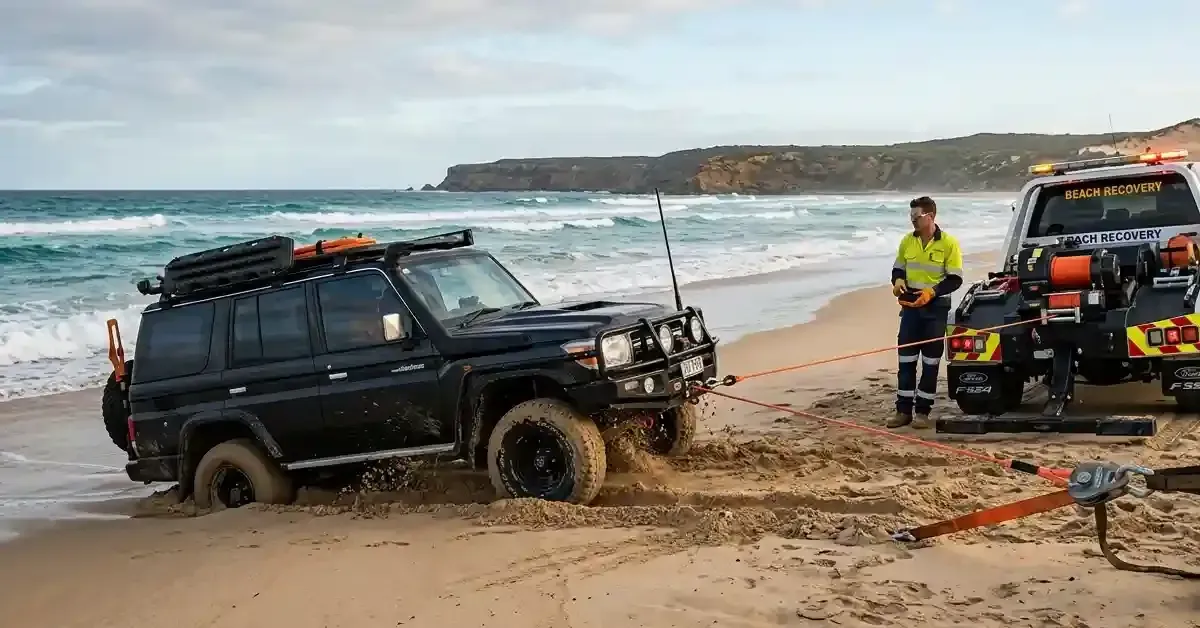
A winch-out service is a roadside assistance solution that recovers vehicles stuck off the roadway or in low-traction conditions. It uses a motorized winch and heavy-duty cable to pull the vehicle back onto stable ground. Unlike standard towing, a winch-out focuses on vehicle recovery, not vehicle transport. The goal is to free a vehicle that cannot move under its own power due to a lack of traction. Drivers often call for a winch-out service if a vehicle is stuck in ditch, sand, mud, snow, icy road, or soft shoulders. In these situations, the tires lose grip and cannot generate enough traction to move the vehicle forward. Continued wheel spinning often causes the vehicle to sink deeper or become more firmly stuck. A professional winch-out service uses specialized recovery equipment to extract the vehicle safely while reducing the risk of damage. Once the vehicle reaches stable ground, the driver can often continue the trip without requiring a tow.
What is A Winch-Out Service?
A winch-out service is a specialized roadside assistance solution that uses a motorized drum with a steel cable or heavy-duty synthetic rope to perform vehicle extraction or vehicle recovery. This service is specifically designed for automobiles that are physically stuck off the road rather than mechanically broken.
Whether a car is buried in mud, sand, snow, trapped at the bottom of a ditch, or immobilized by an obstacle on the terrain, a winch-out pulls the stuck standard vehicle back onto paved or stable ground without relying on the vehicle's own engine power.
How Does the Winch-Out Process Work?
A professional winch-out relies on a powerful cable system and controlled mechanical tension to safely extract a vehicle. When a recovery operator arrives, they follow a systematic procedure to ensure the automobile is removed without structural damage.
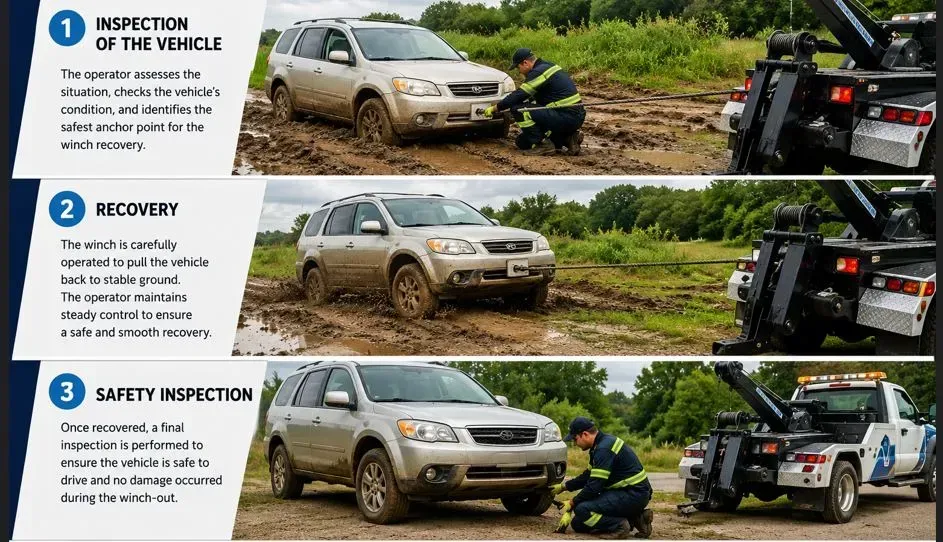
The winch-out process includes:
1. Vehicle Inspection
The recovery process begins with a careful evaluation of the scene. A trained operator evaluates:
The angle of the vehicle relative to stable ground.
The depth to which the tires are buried in mud, sand, or snow.
The strongest attachment points on the vehicle frame or tow hooks.
Potential obstacles, such as rocks, trees, or steep embankments.
2. Vehicle Recovery
Once the assessment is complete, the operator positions the recovery truck securely and anchors it to prevent movement. The operator extends the heavy-duty steel cable and fastens recovery straps or hooks to approved frame anchor points, avoiding fragile components like bumpers or suspension arms. Using a steady, controlled tension, the motorized winch pulls the vehicle slowly back onto solid ground. This controlled movement reduces stress on the vehicle's frame and drivetrain.
3. Safetey Inspection After Recovery
After the vehicle is moved to stable ground, the operator performs a final safety check. This includes inspecting the tires, undercarriage clearance, steering components, and braking systems to ensure the automobile is mechanically sound and safe to resume driving.
How Much Winch-Out Service Costs?
Winch-out service does not have a fixed cost. The cost to winch-out a vehicle depends on the situation, environmental conditions, and the distance required for extraction. Extracting a car from a small ditch costs far less than a deep off-road recovery requiring specialized rigging.
The average winch-out service cost based on different situations is summarized in the table below.
| Recovery Situation | Average Cost Range | Key Price Factors |
|---|---|---|
| Basic Winch-Out | $75 – $125 | Slushy shoulder, shallow mud, flat ground, short cable reach (under 50 feet), accessible roadway, minimal rigging. |
| Moderate Recovery | $125 – $250 | Ditch extraction, steep incline, heavy snow, extended cable reach, elevated tension requirements, winch angle setups. |
| Heavy-Duty / Deep Off-Road Extraction | $250 – $500+ | Submerged in mud, deep ravine, sand dunes, multiple winch lines, snatch blocks, additional service vehicles needed. |
What Factors Affect the Cost of Winch-Out Service?
The main factors that affect the cost of a winch-out service are mentioned below:
Distance from Paved Road: Standard winch services include up to 50 feet of cable. Extra cable length increases labor and equipment requirements.
Terrain Severity: Deep mud, steep ditches, or submerged tires require higher pulling power and precision.
Vehicle Weight: Heavier SUVs, commercial trucks, or loaded vans require high-capacity winch rigs.
Hazardous Environment: Recovering a car during an active storm or from a dangerous highway location may incur emergency surcharge fees.
When Winch-Out Service is Needed?
A winch-out service is required whenever a vehicle loses physical contact with traction-providing surfaces or encounters terrain it cannot overcome independently.
Slippery Terrain: Automobiles stuck on wet grass, loose gravel, or slippery terrain where drive wheels spin freely.
Ditch Extractions: Vehicles that have slid off the roadway into a steep roadside ditch or ravine.
High-Centered Vehicles: Cars high-centered on a barrier, curb, log, or snowdrift, leaving the tires suspended off the ground.
Environmental Hazards: Vehicles immobilized in heavy snow, deep mud, or soft beach sand where tires sink below the surface line.
What is the Difference Between Winch-Out and Traditional Towing?
The main differences between winch-out and traditional towing are mentioned in the table below.
| Comparison Factor | Winch-Out Service | Traditional Towing |
|---|---|---|
| Primary Purpose | Extracting a physically stuck vehicle back onto a drivable road. | Transporting a vehicle from one location to another. |
| Vehicle Operability | Mechanically functional; engine starts but tires lack traction. | Inoperable, mechanically broken, crashed, or unsafe to drive. |
| Core Equipment | Motorized drum winches, steel/synthetic cables, and snatch blocks. | Flatbed platforms, wheel-lift yokes, and safety tie-down straps. |
| Distance Covered | Short-range pull (typically within 50–100 feet of cable length). | Long-distance transit over public roads to a repair shop or lot. |
| Pricing Structure | Flat fee based on terrain severity and cable reach ($75–$250+). | Base hookup fee plus a per-mile transport charge. |
What Should I Do While Waiting for A Winch-Out Service?
Follow the instructions below while waiting safely for a winch-out service to arrive:
Stay inside the vehicle if parked in a dangerous area , such as a highway shoulder with high-speed traffic.
Turn on your emergency hazard lights to maintain visibility for oncoming drivers and the recovery operator.
Avoid spinning your tires , as this buries the wheels deeper and can damage the vehicle's transmission or differential.
Ensure your exact location is communicated clearly to dispatch, noting nearby mile markers, landmarks, or GPS coordinates.
Why You Should A Professional Winch-Out Service to Pull Out Your Vehicle?
You should always choose a professional winch-out service because attempting a DIY vehicle extraction using consumer tow straps or another passenger car can cause severe injuries or major structural damage. Hiring a professional guarantees that the recovery is performed by a trained operator using industry-grade equipment.
A pro winch-out operator ensures maximum safety while focusing on:
Correct Pulling Angles: Professionals calculate mechanical advantage and line-pull angles to prevent the vehicle from rolling over or sustaining frame damage during extraction.
Proper Attachment Points: Trained technicians attach recovery gear strictly to factory-designated frame anchor points, preventing bumpers, axles, or steering rods from being ripped off.
Right Equipment: Commercial winches feature rated steel cables and safety dampeners designed to prevent lethal cable recoil in the event of a line snap.
Frequently Asked Questions
How to choose a reliable winch-out service provider?
To choose a reliable winch-out service, prioritize companies that specify the use of certified recovery operators trained in proper rigging techniques and anchor point selection to prevent structural or frame damage to your vehicle. Ensure the provider maintains a fully equipped fleet featuring high-capacity motorized winches with rated steel or synthetic cables and essential safety gear like snatch blocks.
What information should I provide to dispatch team when requesting a winch-out service?
When requesting a winch-out service, proivde your exact GPS coordinates, the condition of the terrain (deep mud, ice, water, or steep incline), the distance from the nearest paved surface, and whether all four tires are on the ground or if the vehicle is high-centered on an obstacle.
How long does a winch-out service takes?
A standard winch-out extraction typically takes between 15 and 30 minutes. Complex recoveries involving steep inclines or heavy mud may take 45 minutes to an hour.
Will a winch-out damage my car?
No, a winch-out does not damage your car if carried out by a professional operator. Damage typically occurs only when untrained individuals attach tow straps to fragile components like suspension arms or bumpers.
What happens if a vehicle does not starts after a winch-out?
If a vehicle does not starts after a winch-out and shows signs of undercarriage, tire, or mechanical damage that makes the automobile unsafe to drive, the operator will transition from a winch-out service to a traditional flatbed to transport your car safely to a local repair shop.
Is winch-out service covered by insurance?
Yes, a winch-out service is frequently covered if your auto insurance policy includes roadside assistance coverage or comprehensive collision coverage. Check with your insurance provider to confirm coverage limits for off-road vehicle extraction.
Baptiste Towing & Transport provides 24/7 towing, flatbed transport, vehicle recovery, and roadside assistance across Broward, Miami-Dade, and Palm Beach Counties.
COMPANY
FOLLOW US
© 2026. Baptiste Towing and Transport LLC. All Rights Reserved.