24/7 Emergency Line: 954-479-2040


10 Different Types of Towing Services to Know
The different types of towing services include flatbed, wheel-lift, hook and chain, integrated, heavy-duty, motorcycle, off-road recovery, accident recovery, local, and long-distance towing. Each method uses different equipment for different vehicles and road situations. Choosing the right towing service protects the vehicle and speeds up recovery. The wrong service risks drivetrain damage, body panel damage, or suspension failure.
What Are the Different Types of Towing Services?
Towing companies provide multiple service types because no single method works for every vehicle or situation. Vehicle weight, drivetrain, road conditions, and damage level all affect which service is needed.
The main towing service types are:
Flatbed towing — full vehicle platform transport
Wheel-lift towing — lifts two wheels while two remain on the road
Hook and chain towing — frame or axle attachment, mostly for scrap
Integrated towing — combines boom and wheel-lift for commercial vehicles
Heavy-duty towing — recovers oversized commercial vehicles
Motorcycle towing — uses chocks and flatbed for two-wheelers
Off-road recovery (winching) — extracts stuck vehicles from terrain
Accident recovery towing — removes collision-damaged vehicles
Local towing — short-distance transport to nearby shops or homes
Long-distance towing — transports vehicles between cities or states
1. Flatbed Towing
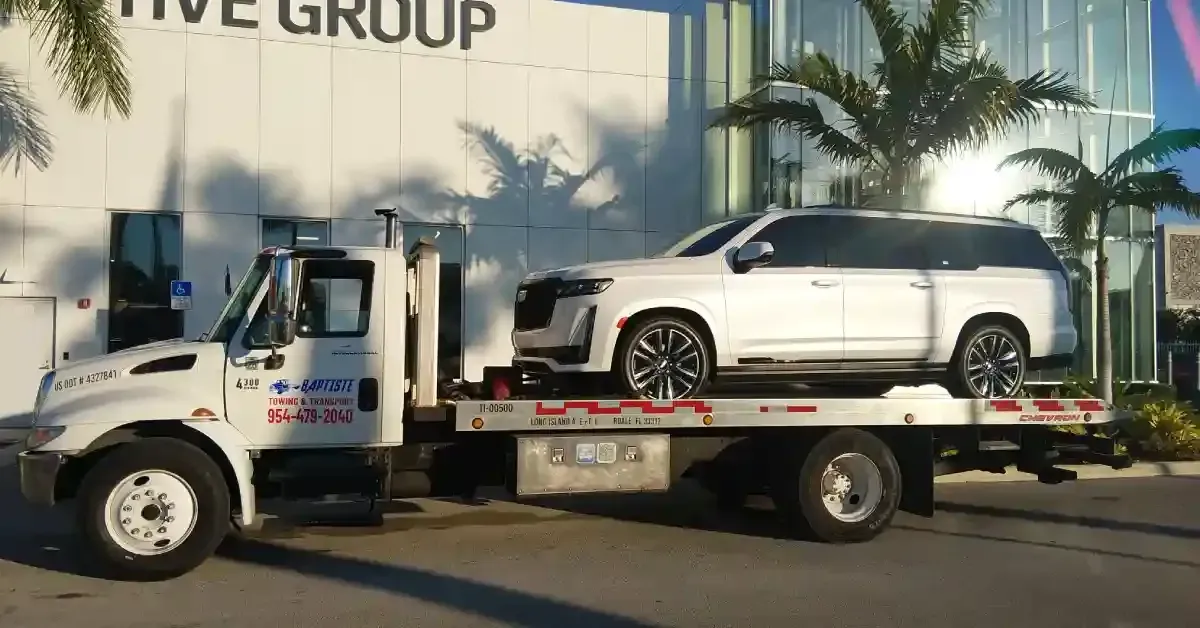
Flatbed towing is a transport method where a hydraulic platform lowers to the ground, and operators drive or winch the vehicle onto the bed. All four wheels leave the road during transport. The platform then rises and locks to secure the vehicle for the journey.
Flatbed tow trucks load vehicles onto a flat, level surface. Operators secure vehicles with tie-down straps and safety chains. This method protects vehicles from road contact throughout transport.
Flatbed transport keeps all four wheels off the road. This prevents drivetrain wear on AWD vehicles where all axles must rotate together. It reduces transport damage on low-clearance and performance cars. Most EV manufacturers recommend flatbed towing to protect the motor and battery systems.
The flatbed is best for the following situations:
Luxury cars and classic cars
Electric vehicles and Tesla models
Sports cars and low-clearance vehicles
AWD and four-wheel-drive vehicles
Vehicles with suspension damage
Accident and collision vehicles
2. Wheel-Lift Towing
Wheel-lift towing is a method where a metal yoke attaches under the front or rear wheels and lifts that end of the vehicle. The opposite two wheels remain on the road during transport. A hydraulic arm controls the lift height and stabilizes the vehicle.
This method is faster to set up than flatbed towing. Wheel-lift trucks work well in tight spaces like parking garages and narrow streets.
Wheel-lift towing works best for:
Passenger sedans and SUVs
Pickup trucks
Short-distance local towing
Parking enforcement and repossession
Roadside breakdowns on standard vehicles
3. Hook and Chain Towing
Hook and chain towing is a method where chains attach to the vehicle frame or axle. One end of the vehicle lifts off the ground while the opposite end drags on the road. This method is rarely used on modern passenger vehicles. Chains damage body panels, bend suspension components, and scratch frames.
Hook and chain towing applies to:
Junk and scrap vehicles
Wrecked or salvage vehicles headed to scrapyards
Vehicles where cosmetic or structural damage is not a concern
4. Integrated Towing
Integrated towing is a method that combines wheel-lift equipment with a reinforced boom in a single truck. This design increases lifting strength and stability. Integrated tow trucks handle commerical heavier loads than standard wheel-lift units.
Integrated tow trucks are used for:
Commercial trucks and utility vehicles
City buses and municipal fleet vehicles
Large delivery vans
Vehicles that exceed standard wheel-lift weight limits
5. Heavy-Duty Towing
Heavy-duty towing is a recovery service that uses reinforced wreckers with high-capacity winches and hydraulic lifting systems. These vehicles recover commercial equipment that standard tow trucks cannot move.
Heavy-duty wreckers recover:
Semi-trucks and tractor-trailers
Dump trucks and box trucks
RVs and motorhomes
Buses and coach vehicles
Construction equipment
6. Motorcyle Towing
Motorcycle towing is a specialized service that transports two-wheeled vehicles using wheel chocks, tie-down straps, and flatbed platforms. Standard tow trucks lack the mounting equipment to secure motorcycles safely.
7. Off-Road Recovery
Off-road recovery is a vehicle extraction service for immobilized vehicles stuck in terrain or off-road conditions. Recovery operators use winches, snatch blocks, recovery straps, and traction boards to free the vehicle.
Recovery teams extract vehicles stuck in:
Mud, sand, and soft terrain
Floodwater and drainage ditches
Construction site terrain
Grass shoulders and embankments
8. Accident Recovery Towing
Accident recovery towing removes collision-damaged vehicles from crash scenes. This service often combines recovery equipment with flatbed transport.
Accident scenes require police clearance before the tow truck operator moves the vehicle. Insurance companies coordinate with towing companies to transport damaged vehicles to approved repair facilities.
Accident Recovery Towing covers the following:
Collision and crash recovery
Police-requested towing from accident scenes
Insurance-coordinated vehicle transport
Rollover recovery using winches and specialized equipment
Damaged vehicle transport to body shops or storage facilities
9. Local Towing
Local towing transports vehicles short distances within the same city or service area. Dispatchers assign local towing for breakdowns, flat tires, engine failures, and non-operational vehicles.
Common destinations for Local Towing include:
Auto repair shops
Tire service centers
Car dealerships
Private residences
Storage facilities
10. Long-Distance Towing
Long-distance towing transports vehicles between cities, states, or across the country. This service handles vehicle relocations, auction purchases, dealer transfers, and personal moves.
Common destinations for Local Towing include:
Auto repair shops
Tire service centers
Car dealerships
Private residences
Storage facilities
Which Towing Service Is Best for Your Vehicle?
The correct towing method depends on the vehicle type. Using the wrong service risks drivetrain damage, suspension failure, and body panel damage. To know which towing service is best for you, follow the table below.
| Vehicle Type | Recommended Towing Service |
|---|---|
| Sedan | Wheel-lift or flatbed towing |
| SUV | Wheel-lift or flatbed towing |
| Pickup truck | Wheel-lift or flatbed towing |
| Tesla | Flatbed towing only |
| Electric vehicle (EV) | Flatbed towing only |
| Luxury car | Flatbed towing only |
| Sports car | Flatbed towing only |
| Classic car | Flatbed towing only |
| Motorcycle | Motorcycle towing (flatbed with wheel chocks and tie-down straps) |
| RV | Heavy-duty towing |
| Semi-truck | Heavy-duty towing |
| Bus | Integrated or heavy-duty towing |
| Construction equipment | Heavy-duty towing |
What is the Difference Between Roadside Assistance and Towing?
Roadside assistance service fixes minor problems at the breakdown location without moving the vehicle. Towing transports the vehicle to a repair facility when the vehicle cannot operate safely.
Roadside Assistance covers:
Battery jump starts
Flat tire changes
Emergency fuel delivery
Lockout service
Minor mechanical adjustments
Towing is required when:
The engine will not start after roadside attempts
Tire damage prevents safe driving
Suspension or steering damage makes the vehicle unsafe
The accident scene requires vehicle removal
The vehicle needs repairs that cannot be completed roadside
FAQs
Which is the safest towing service?
Flatbed towing is the safest method for most vehicles. All four wheels stay off the road, which prevents drivetrain wear, reduces transport damage, and protects low-clearance vehicles.
Does every vehicle require flatbed towing?
No. Standard passenger sedans, SUVs, and pickup trucks work with wheel-lift towing for short distances. Flatbed towing is required for AWD vehicles, electric vehicles, luxury cars, sports cars, and accident-damaged vehicles.
Which towing service is best for electric vehicle?
Flatbed towing is the correct service for electric vehicles. Most EV manufacturers prohibit wheel-lift and hook and chain towing because towing with wheels on the road damages the motor and regenerative braking system.
Which towing methods protects luxury cars?
Flatbed towing protects luxury cars. The hydraulic platform keeps all four wheels off the road, prevents contact with road debris, and eliminates drivetrain stress during transport.
Baptiste Towing & Transport provides 24/7 towing, flatbed transport, vehicle recovery, and roadside assistance across Broward, Miami-Dade, and Palm Beach Counties.
COMPANY
CONTACT
FOLLOW US
SERVICE AREA
© 2026. Baptiste Towing and Transport LLC. All Rights Reserved.