Call Now: (954)-479-2040 for 24/7 Towing


What Are the Towing Requirements for Low-Clearance Vehicles?
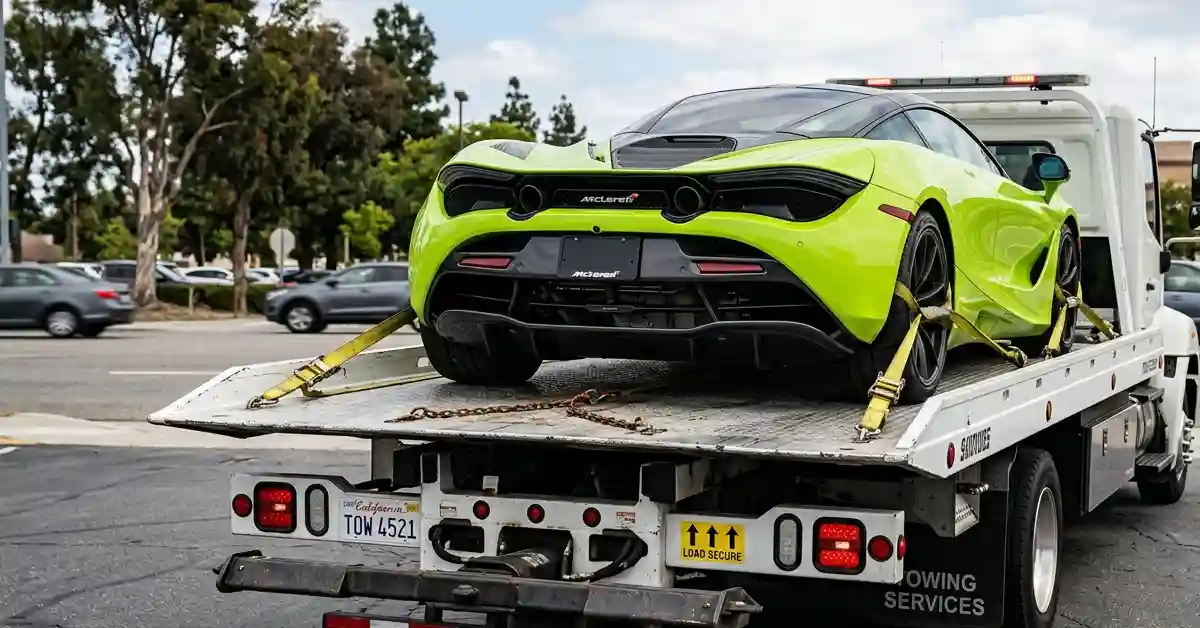
Low-clearance vehicles require specialized towing procedures because their bumper, chassis, splitter, side skirts, and underbody components sit closer to the ground than standard vehicles. Safe transport depends on selecting the right towing equipment, measuring ground clearance, maintaining a loading angle under 15 degrees, and using proper loading and securement techniques. This guide explains what qualifies as a low-clearance vehicle, the towing requirements for sports cars, luxury vehicles, and modified cars, the information dispatch should collect before transport, and the risks associated with improper towing methods. Understanding these requirements helps reduce the risk of bumper damage, chassis scraping, suspension stress, and other transport-related issues while towing a low-profile vehicle.
What is A Low-Clearance Vehicle?
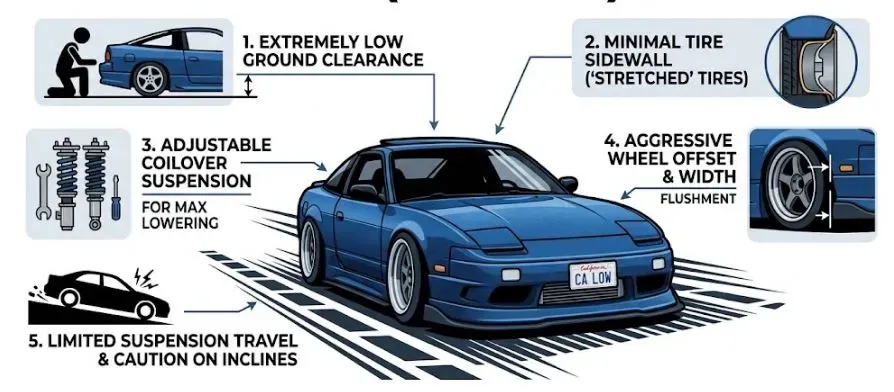
A low-clearance vehicle has a shorter distance between the ground and the lowest point of the vehicle. Sports cars, performance vehicles, luxury cars, modified cars, and vehicles with aftermarket suspension systems often fall into this category.
These vehicles are more sensitive to towing because the bumper, chassis, splitter, side skirts, and exhaust components sit closer to the ground. A steep loading angle or incorrect towing method may cause damage during loading and unloading. Flatbed towing is commonly used for low-profile cars because it keeps all four wheels off the ground and provides greater control during transport.
What are the Towing Requirements for Low-Clearance Vehicles?
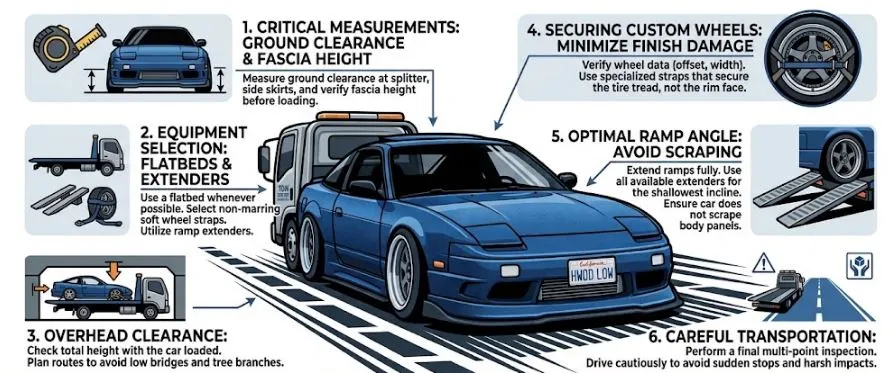
Towing requirements for low-clearance vehicles include:
Choosing the right towing equipment
Measuring ground clearance
Verifying fascia and bumper height
Setting the correct ramp angle
Checking overhead clearance
Transporting the vehicle with care
Choosing the Right Towing Equipment
Flatbed towing is the preferred towing method for most low-profile vehicles. A flatbed keeps the vehicle level during loading and transport, reducing the risk of bumper or chassis damage.
Tilt-tray towing equipment often works well because the bed tilts closer to the ground before loading begins. Extended ramps, race ramps, and low-angle loading ramps help reduce the approach angle for vehicles with limited ground clearance.
Wheel-lift towing may be used in certain situations, but operators must verify that the clearance and vehicle design allow safe loading without damaging the front fascia or underbody.
Measure Ground Clearance
Ground clearance determines how much space exists between the vehicle and the road surface. Measuring clearance helps operators select the proper ramp length and loading angle.
Vehicles with 3-inch to 5-inch ground clearance usually require a flatter loading approach than standard passenger cars. Accurate measurements help prevent contact between the chassis and loading equipment.
Verify Fascia
The front fascia, bumper, splitter, and side skirts often become the first points of contact during loading. Operators should inspect the vehicle before loading begins and identify any low-hanging components. This step helps determine whether additional ramps, wood blocks, or specialized loading equipment are needed to create a safer loading angle.
Set the Ramp Angle
Ramp angle is one of the most important factors when towing a low-clearance vehicle. A loading angle under 15 degrees is commonly preferred for many low-profile vehicles because it reduces the risk of the bumper or chassis contacting the ground. Longer ramps and tilt-bed systems help create a smoother transition from the roadway to the flatbed.
Check Overhead Clearance
Some low-clearance vehicles have modified spoilers, roof racks, racing components, or specialty equipment that affect transport requirements.
Operators should verify overhead clearance before transport begins to avoid contact with structures, trees, parking garages, or other obstacles during loading and unloading.
Transport Vehicle
Low-clearance vehicles require careful securing and transport procedures. Operators should use manufacturer-approved tie-down points whenever possible. Proper positioning and securement help prevent movement during transport while protecting suspension, body panels, and underbody components from damage.
What Dispatch Should Know Before Towing A Vehicle?
Before dispatching a tow truck, the towing company should collect the following information:
Ground Clearance: Knowing the vehicle's ground clearance helps determine the required loading equipment and ramp angle.
Modification Details: Suspension changes, lowered ride heights, body kits, and aftermarket parts may affect loading procedures.
Exact Pickup Location: Dispatch should understand roadway conditions, parking structures, driveway angles, and surrounding obstacles.
Final Destination: The destination helps operators prepare for unloading conditions and access requirements.
What are Risks of Improper Towing A Low-Profile Vehice?
Risks associated with improper towing a low-profile vehicle are mentioned below:
Damage the Front Bumper: Incorrect loading angles may cause bumper contact with the ground.
Scrape the Chassis: Low underbody components may contact ramps or loading equipment.
Damage Side Skirts: Improper positioning may cause side skirt damage during loading.
Stress Suspension Components: Incorrect tie-down methods may place unnecessary force on suspension parts.
Damage Aftermarket Parts: Splitters, diffusers, spoilers, and body kits face increased risk during transport.
Create Loading Instability: Poor equipment selection may reduce vehicle stability while loading.
Increase Repair Costs: Minor towing mistakes may lead to costly cosmetic or structural repairs.
Are There Specialized Methods for Towing Low-Clearance Vehicles?
Yes, flatbed towing, tilt-tray towing, extended loading ramps, race ramps, and low-angle loading techniques are specialized methods used for low-clearance vehicles. These methods reduce the loading angle and help protect the bumper, chassis, and underbody components during transport. Flatbed towing remains one of the most commonly recommended options because it keeps all four wheels off the ground and provides greater protection throughout the towing process.
What is the best method for towing sports cars?
Flatbed towing is the best method for towing sports cars because it keeps all four wheels off the ground and reduces the risk of damage to low-clearance components. Sports cars often have low ground clearance, performance suspensions, front splitters, side skirts, and aerodynamic parts that are vulnerable during loading and transport.
How much ground clearance is considered low for towing?
A vehicle is generally considered low-clearance for towing when it has less than 5 inches of ground clearance. Vehicles with 3 to 5 inches of clearance often require low-angle loading ramps, tilt-tray equipment, or flatbed towing to prevent the bumper, splitter, or underbody from contacting the ground during loading.
Can a wheel-lift tow truck tow a low-profile vehicle?
Yes, a wheel-lift tow truck can tow a low-profile vehicle but only in certain situations. A wheel-lift tow truck may tow a low-clearance vehicle if sufficient clearance exists around the bumper and underbody. However, flatbed towing is typically preferred because it provides greater protection and reduces the risk of scraping the fascia, chassis, or suspension components during loading and transport.
Baptiste Towing & Transport provides 24/7 towing, flatbed transport, vehicle recovery, and roadside assistance across Broward, Miami-Dade, and Palm Beach Counties.
Fort Lauderdale Location
Hollywood Location
Pompano Beach Location
Coconut Creek Location
COMPANY
Major Highways
I-95
I-75
I-595
SR 91
SR 869
© 2026. Baptiste Towing and Transport LLC. All Rights Reserved.