How Long Does A Tow Truck Take To Arrive?
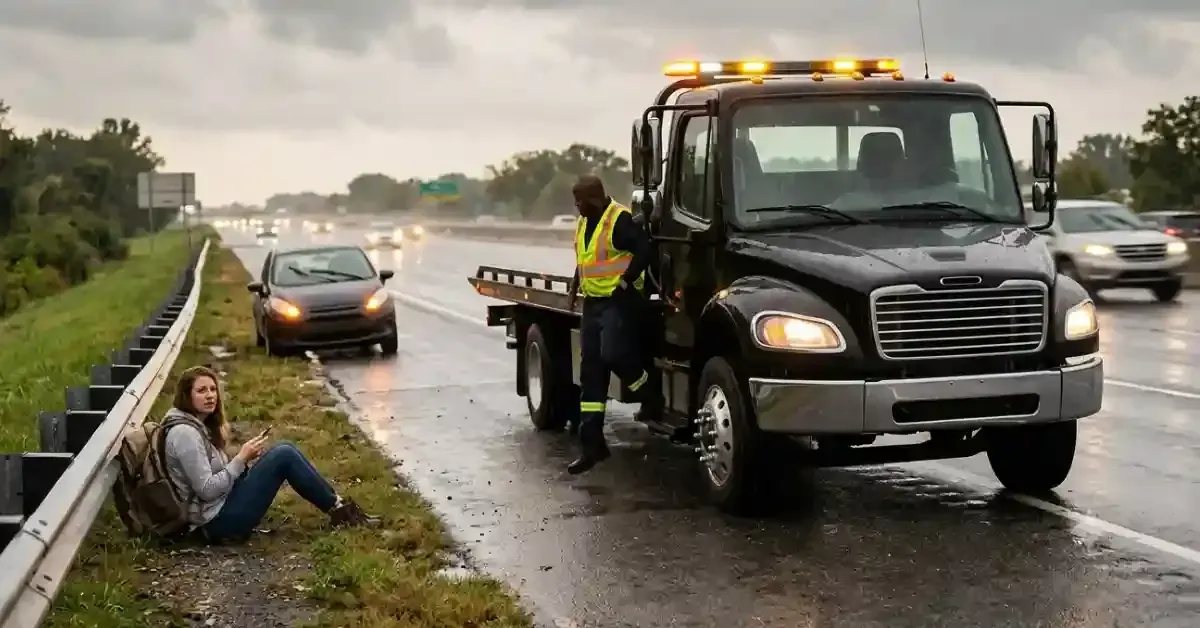
The average time it takes for a tow truck to arrive falls between 30 and 60 minutes for a standard breakdown, when the dispatcher confirms the vehicle's exact location quickly and the call gets treated with normal priority. This response time depends far less on distance than most drivers assume. Wait times extend significantly under 2 conditions: when a call gets classified as non-emergency and pushed lower in a dispatch queue, or when a call center struggles to identify the vehicle's exact location, such as a specific freeway onramp or intersection. Insurance-based dispatch and car-brand concierge towing show this pattern most often, sometimes stretching past 2 hours.
A nearby towing company with an available truck may reach you quickly. A provider handling multiple roadside emergencies may take longer to dispatch a driver. Your safety situation, vehicle condition, and required equipment can change the estimated arrival time.
What is the Typical Wait Time For A Tow Truck?
Tow truck arrival time usually ranges from 30 to 60 minutes. Your location and truck availability affect the wait most. Busy periods, severe weather, rural roads, and special equipment may extend it to two hours or longer.
A 2024 roadside assistance report from Agero found a median arrival time of 47 minutes. Its median estimated arrival time was 60 minutes. These figures provide a useful benchmark, but they do not represent every towing company or location.
| 15–30 minutes | Nearby truck, light traffic, urban area |
| 30–60 minutes | Normal local towing request |
| 60–90 minutes | Heavy traffic, busy periods, limited trucks |
| 90 minutes–2 hours | Severe weather, rural areas, high demand |
| More than 2 hours | Major demand surge, limited coverage, complex dispatch |
What Affects How Long A Tow Truck Takes to Arrive At Your Location?
Tow truck arrival time depends on several connected factors. The main factors incldue demand, location, vehicle requirements, emergency level, and the dispatch process.
1. Demand
High demand is one of the biggest reasons tow truck arrival times increase. A towing company may have several available trucks during normal hours, but those same trucks may already handle other roadside emergencies during busy periods.
Demand increases during:
Rush hour traffic
Heavy rain and storms
Flooding events
Snow and icy roads
Holiday travel periods
Major accidents
Weekend nights
When call volume rises, dispatchers must assign trucks based on location, safety risks, and service priority. A driver who is only a few miles away may still take longer if they are completing another tow. Traffic in the area affects the time between dispatch and arrival. A tow truck may be assigned quickly but still take longer to reach you because of road conditions. Providing accurate location details allows the driver to choose the best route and avoid unnecessary delays.
2. Location & Distance From Tow Truck
Your location directly affects how quickly a tow truck can reach you. The closest truck is not always available, so dispatchers may need to send a driver from another service area.
Response times varies by the location. Cities often have faster towing response times because more trucks operate nearby. However, traffic congestion can slow travel after dispatch. Rural locations often have longer wait times because fewer towing companies cover larger areas.
Highway breakdowns may receive priority because of safety concerns. However, reaching the vehicle can take longer if the truck must travel through congested roads.
3. Vehicle Type & Equipment Used
The type of vehicle affects response time because towing companies must send the correct equipment. A company may have an available truck but still need to locate a truck that can safely handle your vehicle.
Standard vehicles usually have shorter wait times because most tow trucks can transport common cars, SUVs, and small trucks.
Special vehicles may require additional planning, including:
Electric vehicles
All-wheel-drive vehicles
Luxury cars
Classic vehicles
Motorcycles
Commercial vehicles
Electric vehicles and AWD vehicles often require specific towing methods such as flatbed for damage-free towing. Many require flatbed transport to prevent drivetrain or battery damage.
Luxury and exotic vehicles usually need careful handling. A towing company may send a flatbed truck with proper straps and loading equipment instead of using a standard tow truck.
Commercial vehicles require heavy-duty towing equipment. Since heavy-duty trucks are less common, the available truck may be farther away.
The correct equipment may increase the wait time slightly, but it helps prevent vehicle damage and unsafe towing.
4. Emergency Level & Safety Priority
The urgency of your situation affects how a towing company prioritizes calls. Dispatchers usually consider safety risks when assigning available trucks.
Higher-priority situations may include:
Vehicle blocking traffic lanes
Highway breakdowns
Accident scenes
Unsafe roadside locations
Vehicles creating traffic hazards
Low-priority situations may include:
A vehicle parked safely at home
A breakdown in a parking lot
Scheduled vehicle transport
5. Dispatch Process & Service Provider
The towing request process affects how quickly a truck gets assigned. Different service providers use different dispatch systems.
A local towing company usually provides direct communication between the customer and dispatcher. This allows the company to check nearby truck availability and provide real-time updates.
Benefits of direct local dispatch include:
Faster communication
Direct ETA updates
Local truck information
Most towing companies in USA now use GPS tracking and digital dispatch systems. These tools help locate nearby trucks, monitor driver status, and provide more accurate arrival estimates.
How Can You Get A Tow Truck Faster?
To get a tow truck faster at your location, follow the tips below
Provide your exact location: Share details such as your street address, highway name, travel direction, exit number, mile marker, nearby landmarks, or GPS location. Precise information helps the dispatcher send the closest available truck and reduces delays caused by location confusion.
Avoid general location descriptions: Saying "I am near the highway" does not give enough information for quick dispatch. Clear directions help the driver find your vehicle faster, especially on highways, large parking areas, or unfamiliar roads.
Explain your situation clearly: Tell the dispatcher what happened, your vehicle type, whether you are blocking traffic, passenger safety conditions, and any vehicle damage. These details help the company select the correct truck and determine service priority.
Describe the problem accurately: Mention whether you have a breakdown, flat tire, accident damage, dead battery, or another issue. Clear information prevents delays caused by sending the wrong equipment.
Call a local tow company directly: A direct call may reduce delays from third-party dispatch systems. Local providers can often check nearby truck availability and provide a more accurate arrival estimate typically between 30 to 60 minutes.
Ask for truck assignment details: Confirm whether a driver has accepted the job, the current ETA, and the type of tow truck being sent. A confirmed assignment provides a more reliable arrival time than a general service request.
What To Do While Waiting For A Tow Truck?
While waiting for a tow truck, follow the instructions below:
Prioritize your safety while waiting: Stay alert and protect yourself from traffic risks while the tow truck is on the way. Your actions should depend on your location, road conditions, and whether your vehicle is in a safe area.
Turn on your hazard lights: Use hazard lights to make your vehicle more visible to other drivers, especially at night, on highways, or in areas with heavy traffic.
Keep your vehicle secure: If your vehicle is parked in a safe location, keep doors locked and remain aware of your surroundings while waiting for assistance.
Avoid standing near moving traffic: Do not stand directly beside your vehicle on busy roads. Passing vehicles may create additional safety risks, especially on highways and narrow shoulders.
Move away from traffic when possible: If you are stranded on a highway or unsafe roadside area, move to a safer location away from active traffic when conditions allow.
Avoid standing behind or in front of your vehicle: These areas create higher risks if another driver loses control or cannot see your stopped vehicle.
Contact emergency services if conditions become dangerous: Call emergency responders if your vehicle blocks traffic, you are in an unsafe location, or there is an immediate safety concern.
Keep your phone available for updates: The tow driver or dispatcher may call to confirm your location, vehicle details, or access instructions before arrival.
Confirm driver information and ETA: Ask for the driver's name, truck description, and updated arrival time. This helps you identify the correct tow truck when it arrives.
Answer unknown calls while waiting: The driver may use a different phone number to contact you while trying to locate your vehicle. Missing the call may delay service.
How Long Does the Towing Process Takes After the Tow Truck Arrival?
Once the tow truck arrives at your location, it takes anywhere between 20 minutes (for local tow) to one hour to transport your vehicle to the final destination.
The towing process involves:
Vehicle Inspection
Hookup and Loading
Transportation
Drop-off Process
What Makes A Towing Provider Reliable for Fast Response?
A reliable towing company focuses on accurate ETAs and clear communication. A towing company shows faster response if:
Local Availability: A local tow truck service reaches to your destination faster than the international towing provider.
Proper Equipment: The towing service must use the proper equipment based on the type of vehicle being towed.
Clear Communication: A reliable towing provider explains the ETA, transparent pricing, and service process.
Baptiste Towing and Transport offers the most reliable, affordable, and 24/7 dispatch service in the Broward County. Our ETA is under 30 minutes for most locations across the Broward County.
FAQs About Tow Truck Arrival Time
What is the average wait time for a tow truck?
The average wait time for a tow truck is under 30 minutes for a local area with light traffic and fair weather conditions. The tow truck wait time can exceed up to 1 hour in heavy traffic and bad weather conditions.
How accurate are the tow arrival estimates?
Tow truck arrival estimates are usually accurate but may change due to traffic, weather, truck availability, and job complexity. Traditional dispatch systems rely on dispatcher experience and driver availability, while digital dispatch systems use GPS tracking and real-time updates to provide more precise ETAs. The most reliable estimate comes after a driver accepts the job and begins traveling to your location.
How long does a tow truck takes to arrive at night time?
A tow truck usually takes less than one hour to arrive at night, depending on truck availability, location, traffic conditions, and the number of active service calls. Some areas may have faster response times when a nearby driver is available, while rural areas or busy periods may take longer.
Does calling 911 get a tow truck to arrive faster?
No, calling 911 does not usually make a tow truck arrive faster for normal breakdowns. Emergency dispatchers prioritize situations involving immediate safety risks, such as accidents, injuries, vehicles blocking active traffic lanes, or dangerous roadside conditions.
What happens if the tow truck does not arrives in the given ETA?
If a tow truck does not arrive in the given ETA, contact the towing company for an updated arrival time and driver status. Delays may happen because of traffic, weather, previous jobs, or high call volume. If the company cannot provide a clear update, consider another provider after confirming cancellation terms.
Do flatbed trucks take longer than wheel-lift trucks to arrive?
The type of tow truck whether a flatbed or wheel-left has nothing to do with the arrival time. Flatbed tow trucks, however, are less common in fleets, therefore the limited availability increases their estimated time of arrival at the location.
Do rural areas experience longer tow truck waiting time?
Yes, rural areas may experience longer waiting times between 40 to 90 minutes due to increased distance and limited tow trucks nearby.
Baptiste Towing & Transport provides 24/7 towing, flatbed transport, vehicle recovery, and roadside assistance across Broward, Miami-Dade, and Palm Beach Counties.
COMPANY
FOLLOW US


© 2026. Baptiste Towing and Transport LLC. All Rights Reserved.