24/7 Emergency Line: 954-479-2040


Fuel Delivery vs. Towing: Which Service Should You Choose When You're Out of Gas?
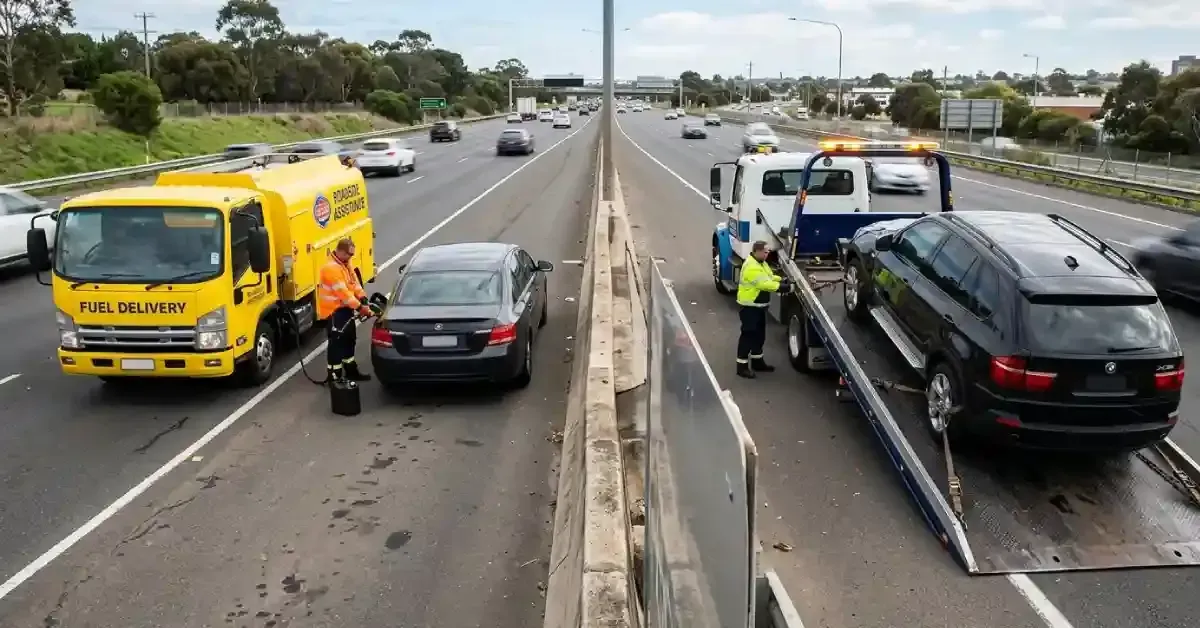
When a vehicle runs out of fuel, most drivers face an important decision: should they call a fuel delivery service or a towing company? Both services can help during a roadside emergency, but the right choice depends on your vehicle's condition, location, safety concerns, and overall cost. Understanding the differences between fuel delivery and towing can help you get back on the road quickly while avoiding unnecessary expenses.
Fuel delivery is typically the best option when a vehicle has simply run out of gas and no other mechanical problems are present. Towing is generally recommended when the vehicle cannot safely operate after refueling or requires transportation to a repair facility.
How to Choose Between Fuel Delivery or Towing Service?
Choosing between fuel delivery and towing depends on the condition of the vehicle, your location, safety concerns, and overall cost.
Choose Fuel Delivery If
Fuel delivery is usually the best choice when the vehicle has simply run out of gas and no additional problems are present. It is often the fastest solution and is generally cheaper than arranging a tow. Drivers who want to resume their trip quickly without transporting the vehicle elsewhere often benefit most from fuel delivery.
Choose Towing Service If
Towing may be necessary when the vehicle has additional mechanical issues, cannot safely continue operating after refueling, or requires professional repair. If the vehicle is located in a hazardous area or if safety concerns make roadside service impractical, towing may provide the most effective solution despite the higher cost.
| Comparison Factor | Fuel Delivery Service | Towing Service |
|---|---|---|
| Primary Purpose | Delivers fuel directly to your vehicle so you can continue driving. | Transports your vehicle to a repair shop, gas station, or another destination. |
| Best For | Vehicles that have simply run out of gas and are otherwise functioning normally. | Vehicles with additional mechanical issues or those that cannot safely continue operating. |
| Response Outcome | Vehicle is refueled on-site and can usually resume its journey immediately. | Vehicle is removed from the roadside and taken to a safer or repair location. |
| Cost | Generally cheaper because only fuel and roadside assistance are provided. | Usually more expensive due to vehicle transportation and mileage charges. |
| Speed of Resolution | Often the fastest solution when fuel is the only issue. | May take longer because loading, transport, and unloading are required. |
| Convenience | Eliminates the need to walk to a gas station or leave the vehicle unattended. | Provides a complete solution when the vehicle cannot be driven. |
| Roadside Safety | Helps drivers avoid walking along a highway with a high volume of vehicles moving rapidly. | Removes the vehicle entirely from hazardous roadside locations. |
| Vehicle Movement | Vehicle remains in the same location until refueled. | Vehicle is physically relocated using a tow truck. |
| Additional Mechanical Problems | Does not address mechanical failures beyond an empty fuel tank. | Ideal for vehicles experiencing engine, transmission, battery, or other mechanical issues. |
| Distance Considerations | Most useful when enough fuel is needed to reach a nearby gas station. | Useful when the vehicle needs to travel a long distance to a repair facility. |
| Typical Scenario | A driver is stranded because there is no gas left in the fuel tank. | A driver is stranded because the vehicle cannot operate even after refueling. |
| Recommended Choice | Choose when the vehicle only needs fuel. | Choose when the vehicle requires repair, inspection, or safe relocation. |
What are the Main Advantages of Choosing Fuel Delivery Service?
Fuel delivery service offer the following benefits when a vehicle runs out of fuel.
Efficient Fuel Delivery: One of the main benefits of fuel delivery is speed. Roadside assistance providers can bring gasoline or diesel directly to your location, allowing you to refuel your vehicle without needing to leave the roadside. In many situations, this enables drivers to resume their trip within a short period after assistance arrives.
Avoiding Risk of Walking to a Fuel Station: Running out of fuel often occurs in areas where gas stations are not within walking distance. Attempting to walk along a highway or major roadway can be dangerous, particularly when there is a high volume of vehicles moving rapidly. Fuel delivery eliminates this risk by bringing fuel directly to the vehicle, helping drivers remain in a safer location while waiting for assistance.
Lower Cost than Towing: Fuel delivery is generally cheaper than towing because the service only involves transporting fuel rather than moving the entire vehicle. Drivers who simply need enough fuel to reach a nearby gas station can often resolve the situation at a lower overall cost compared to arranging a tow.
Convenience and Minimal Disruption: Fuel delivery allows the vehicle to continue its journey immediately after being refueled. There is no need to schedule repairs, arrange transportation from a service facility, or wait for the vehicle to be unloaded at another location.
What are the Main Advantages of Towing Service?
Towing service offers the following benefits beyond the fuel delivery service.
Transport Damaged Vehicle: A tow truck can transport a disabled vehicle to a repair facility where technicians can diagnose and repair any mechanical issues. This is especially helpful when the cause of the breakdown is uncertain or when multiple vehicle problems are present.
Clear Objects and Improve Traffic Flow: A tow truck can transport a disabled vehicle to a repair facility where technicians can diagnose and repair any mechanical issues. This is especially helpful when the cause of the breakdown is uncertain or when multiple vehicle problems are present.
How to Know If Your Vehicle Is Out of Gas?
Below are the signs to know if your vehicle is out of gas:
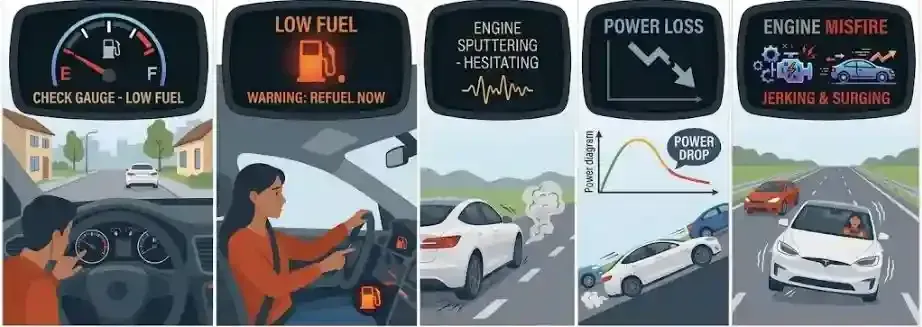
Check the fuel gauge for an empty tank or a reading close to "E."
Watch for a low fuel warning light illuminated on the dashboard.
Notice sudden engine sputtering or hesitation while driving.
Experience a loss of power during acceleration or when maintaining speed.
Observe the engine misfiring as fuel delivery becomes inconsistent.
Feel the vehicle jerking or surging unexpectedly.
What are the Steps to Prevent Running Out of Gas?
Follow the steps below to prevent a vehicle run out of gas:
Monitor fuel levels and avoid waiting until the tank is nearly empty before stopping at a gas station. Many modern vehicles provide estimated driving ranges, but these calculations should be treated as estimates rather than guarantees.
Identify fueling locations along their route and avoid assuming that gas stations will always be available when needed. This is especially important when traveling through rural areas, remote highways, or unfamiliar regions.
Respond to low-fuel warning lights and maintaining a reasonable fuel reserve can significantly reduce the likelihood of becoming stranded and needing emergency roadside assistance.
Will Running Out of Gas Damage Your Car?
No, running out of gas does not necessarily cause immediate damage to a vehicle, but repeatedly allowing the fuel tank to become empty can create potential issues over time. Many vehicles rely on fuel to help cool and lubricate the fuel pump. When fuel levels become extremely low, the pump may work harder and experience additional wear. Repeatedly operating a vehicle with very little fuel can potentially shorten the lifespan of fuel system components.
Can A Tow Company Bring Me Gas?
Yes, a tow company can bring gas to your mentioned location. Towing companies like Baptiste Towing and Transport offer prompt gas delivery services as part of their roadside assistance programs. In addition to transporting disabled vehicles, many tow companies dispatch service vehicles capable of delivering gasoline or diesel directly to stranded motorists. This allows drivers to refuel without requiring a tow when the only issue is an empty fuel tank.
Because fuel delivery eliminates the need to transport the vehicle, it is often the cheaper and more cost-effective solution. However, if the vehicle experiences additional mechanical problems or cannot safely continue operating after receiving fuel, the towing company can also provide towing services to transport the vehicle to a repair facility.
For drivers who simply ran out of gas, fuel delivery is usually the fastest way to return to the road and continue their journey.
Baptiste Towing & Transport provides 24/7 towing, flatbed transport, vehicle recovery, and roadside assistance across Broward, Miami-Dade, and Palm Beach Counties.
COMPANY
FOLLOW US
© 2026. Baptiste Towing and Transport LLC. All Rights Reserved.