24/7 Emergency Line: 954-479-2040


Flatbed vs Wheel-Lift Towing: Which Is Better to Tow Your Vehicle?
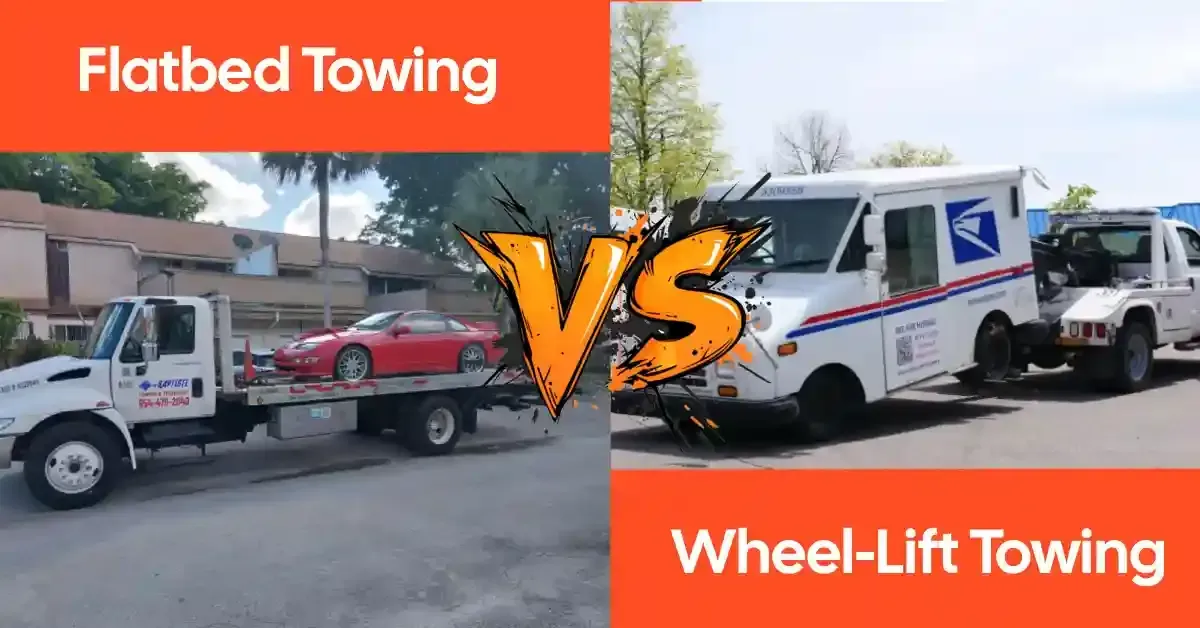
The main difference between flatbed towing and wheel-lift towing is that flatbed towing keeps all four wheels off the ground, while wheel-lift towing lifts only the front or rear wheels and allows the remaining wheels to roll on the road. Flatbed towing provides greater vehicle protection and is commonly used for AWD, 4WD, luxury, electric, classic, and damaged vehicles. Wheel-lift towing is often used for front-wheel-drive or rear-wheel-drive vehicles during short-distance transport because it requires less setup time and is easier to maneuver in tight spaces. Understanding these differences helps determine which towing method is appropriate for a specific vehicle and situation.
What is Flatbed Towing?
Flatbed towing is a method where your vehicle gets loaded onto a flat, tilting metal platform mounted on the back of a truck — lifting all four wheels completely off the ground for the entire journey.
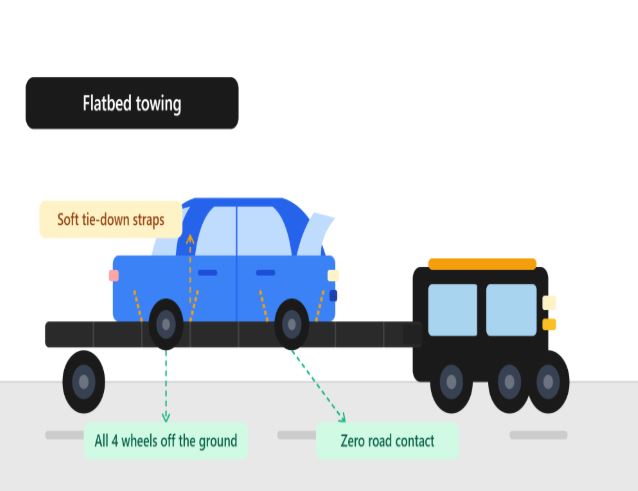
Flatbed trucks use soft tie-down straps to secure the vehicle at the wheel wells — not the frame or bumper. This protects the body, undercarriage, and finish during the entire haul.
What is Wheel-Lift Towing?
Wheel lift towing is a towing method that lifts either the front or rear wheels of a vehicle off the ground while the remaining wheels stay on the road during transport.
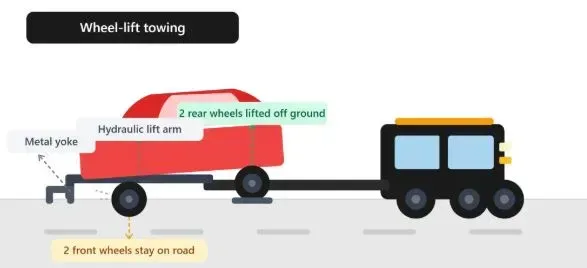
Wheel-lift trucks are faster to set up and easier to maneuver in tight urban spaces. They work well for short local tows on standard front-wheel or rear-wheel drive vehicles.
What Are the Main Differences Between Flatbed and Wheel-Lift Towing?
The main differences between flatbed and wheel-lift towing are summarized in the table below.
← Scroll to see full table
| Factor | Flatbed Towing | Wheel-Lift Towing |
|---|---|---|
| Wheels on ground | None — all 4 lifted | 2 wheels stay on road |
| AWD & 4WD vehicles | ✓ Safe — only recommended method | ✗ Risks drivetrain damage |
| Luxury & exotic cars | ✓ Recommended | ✗ Risk of body damage |
| Standard FWD & RWD cars | ✓ Safe | ✓ Safe for short tows |
| Motorcycles | ✓ With wheel chock | ✗ Cannot secure safely |
| Classic & vintage cars | ✓ Recommended | ✗ Frame stress risk |
| Inoperable vehicles | ✓ Winch loads onto bed | ⚠ Requires neutral shift |
| Long-distance transport | ✓ Preferred method | ✗ Not recommended |
| Short local tows | ✓ Safe | ✓ Practical & faster setup |
| Urban maneuverability | Moderate | ✓ Easier in tight spaces |
| Vehicle contact points | Zero frame contact | Wheel cradle only |
| Setup time | Longer | ✓ Faster |
| Cost | Higher — starts ~$75–$95 | Lower — starts ~$55–$75 |
Always confirm your vehicle type with the operator before dispatch. AWD and 4WD vehicles require flatbed — no exceptions. Call Gary Baptiste at 954-479-2040 to confirm the right method for your vehicle.
Which Vehicles Need Flatbed Towing?
AWD and 4WD vehicles must use a flatbed. Every towing operator knows this without being asked. Vehciles that require flatbed towing are mentioned below.
Luxury Vehicles: Low ground clearance makes wheel-lift hookup a direct risk to bumpers, splitters, and side skirts. A metal yoke sliding under a Ferrari, Porsche, or Lamborghini makes contact with bodywork that costs thousands to repair.
Motor Cycles: A wheel-lift cannot secure a two-wheeled vehicle. There is no stable contact point. A flatbed with a wheel chock and tie-down straps holds the motorcycle upright and stationary during the entire transport.
Classis and Vintage Vehicles: Older vehicle frames were not built to absorb the stress of modern towing equipment. A wheel-lift hookup puts lateral pressure on aging metal. Flatbed transport keeps the vehicle level and stress-free from pickup to destination.
Imoperable Vehicles: A vehicle that cannot shift to neutral cannot roll safely onto a wheel-lift. A flatbed winch cable pulls the vehicle up the ramp without requiring the drivetrain to function at all.
Which Vehicles Need Wheel-Lift Towing?
Wheel-lift towing is ideal for two-wheel drive (FWD or RWD) vehicles with undamaged drivetrains. Wheel-lift towing suits well with:
Standard front-wheel drive sedans and compact cars on short local tows are well-suited to wheel-lift. The front wheels lift, the rear wheels roll, and the drivetrain stays disengaged.
Rear-wheel drive vehicles towed from the rear also work safely with wheel-lift. The driven wheels lift off the ground — no drivetrain stress occurs.
Tight urban spaces such as the ones in Fort Lauderdale, Hollywood, or downtown Pompano Beach sometimes cannot accommodate a full flatbed truck. A wheel-lift unit reaches spots a flatbed cannot.
Emergency situations where the nearest flatbed is unavailable may require a wheel-lift dispatch as a temporary solution. In that case, confirm with the operator that your vehicle is compatible before they hook up.
How Much Does Flatbed and Wheel-Lift Towing Cost?
The cost of flatbed towing and wheel-lift towing varies depending on factors such as the towing distance, vehicle size and weight, location, time of service, and the complexity of the recovery. In most cases, wheel-lift towing is less expensive because it requires less equipment and is commonly used for shorter-distance tows involving standard passenger vehicles. Flatbed towing typically costs more because the entire vehicle is loaded onto the truck's platform, which often requires additional equipment and loading time.
On average, the cost of flatbed towing ranges between between $50 and $95 for a local tow under five miles. Mileage charges apply beyond the base distance. Likewise, the cost for wheel-lift towing ranges between $20 to $40 lower than flatbed for comparable distances.
The cost of wheel-lift and flatbed towing across Broward County follows a base rate plus mileage structure for both methods.
Factors that affect the final towing cost include:
Towing distance, as longer trips generally increase the overall cost.
Vehicle type and size, since larger vehicles may require specialized equipment.
Roadside conditions, such as accidents, ditches, mud, or difficult recovery situations.
Time of service, including after-hours, weekends, holidays, or emergency calls.
Storage or impound fees, if the vehicle must be transported to a storage facility.
Which Towing Method is Best, Flatbed or Wheel-lift?
Choose flatbed towing for: AWD and 4WD vehicles, luxury and exotic cars, motorcycles, classic and vintage vehicles, inoperable cars, and any long-distance transport beyond 15 miles.
Choose wheel-lift towing for: Standard FWD or RWD vehicles on short local tows, tight urban access points, and situations where a flatbed unit is unavailable and vehicle compatibility is confirmed.
Can't decide on which tow truck to book? Baptiste Towing dispatches towing units across Broward County 24 hours a day. Gary Baptiste confirms the right method for your vehicle before the truck leaves. Call 954-479-2040 — Gary picks up day or night.
Frequently Asked Questions
Which tow truck is better, a flatbed or wheel-lift?
Neither truck is best for every situation. A flatbed keeps all four wheels off the road. A wheel-lift raises two wheels and leaves the others rolling. The vehicle type, drivetrain, damage, and towing distance guide the choice.
Is flatbed towing safer than wheel-lift towing?
Yes, flatbed towing is generally safer and more secure than wheel-lift towing because it lifts all four wheels completely off the ground.
Is flatbed towing expensive than wheel-lift towing?
Yes, flatbed towing is generally expensive than the wheel-lift towing due to the type of equipment used for moving a vehicle safely to the final destination.
Can a flatbed tow a vehicle with locked wheels?
Yes, but the loading method depends on the vehicle's condition. Winching equipment may help load a vehicle with locked or damaged wheels. Severe damage may require specialized recovery equipment.
What should I request when calling a towing company?
Tell the dispatcher your vehicle's make and model. Mention AWD, 4WD, EV status, locked wheels, accident damage, or other issues. This helps the company send suitable equipment.
Baptiste Towing & Transport provides 24/7 towing, flatbed transport, vehicle recovery, and roadside assistance across Broward, Miami-Dade, and Palm Beach Counties.
COMPANY
FOLLOW US
© 2026. Baptiste Towing and Transport LLC. All Rights Reserved.