24/7 Emergency Line: 954-479-2040


10 Items to Keep In Your Vehilce In Case of A Breakdown
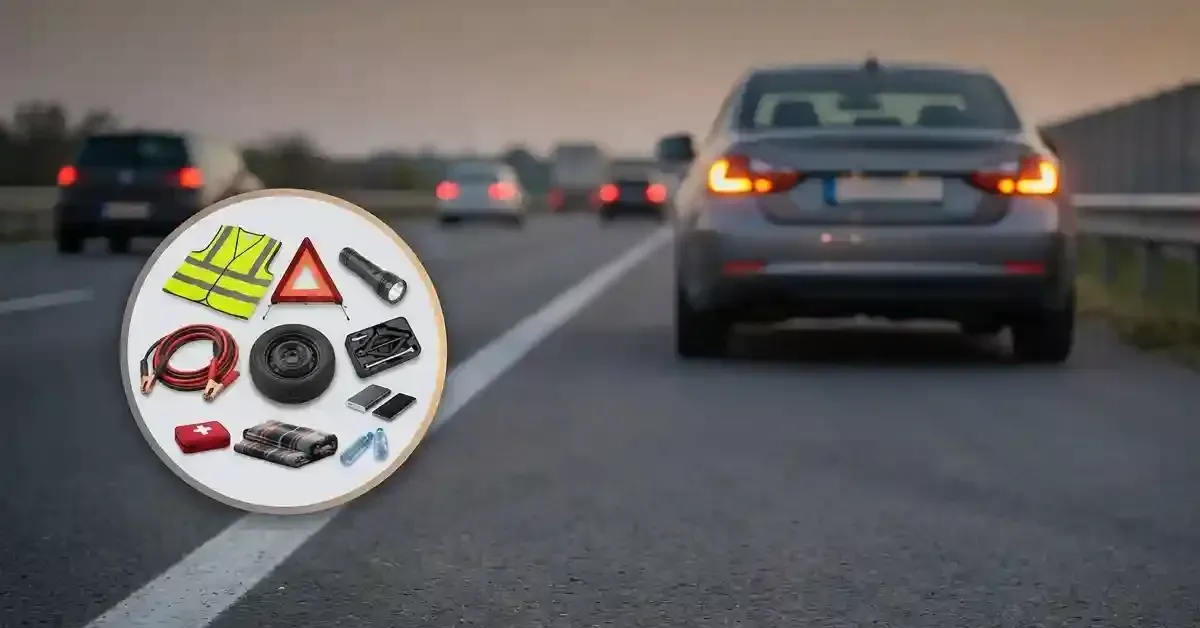
Equipping your vehicle with the correct subset of emergency tools ensures that when mechanical failure, a flat tire, or a dead battery occurs, you can establish visibility, diagnose minor issues, or maintain safety while awaiting professional dispatch. If you fail to maintain these necessary items, a simple breakdown can escalate rapidly; you risk remaining invisible to high-speed traffic, succumbing to environmental exposure, or facing complete communication failure with emergency services, turning a minor inconvenience into a life-threatening crisis.
What Are the Most Necessary Items for a Car Breakdown Kit?
The most necessary items to include in a car breakdown kit are mentioned below.
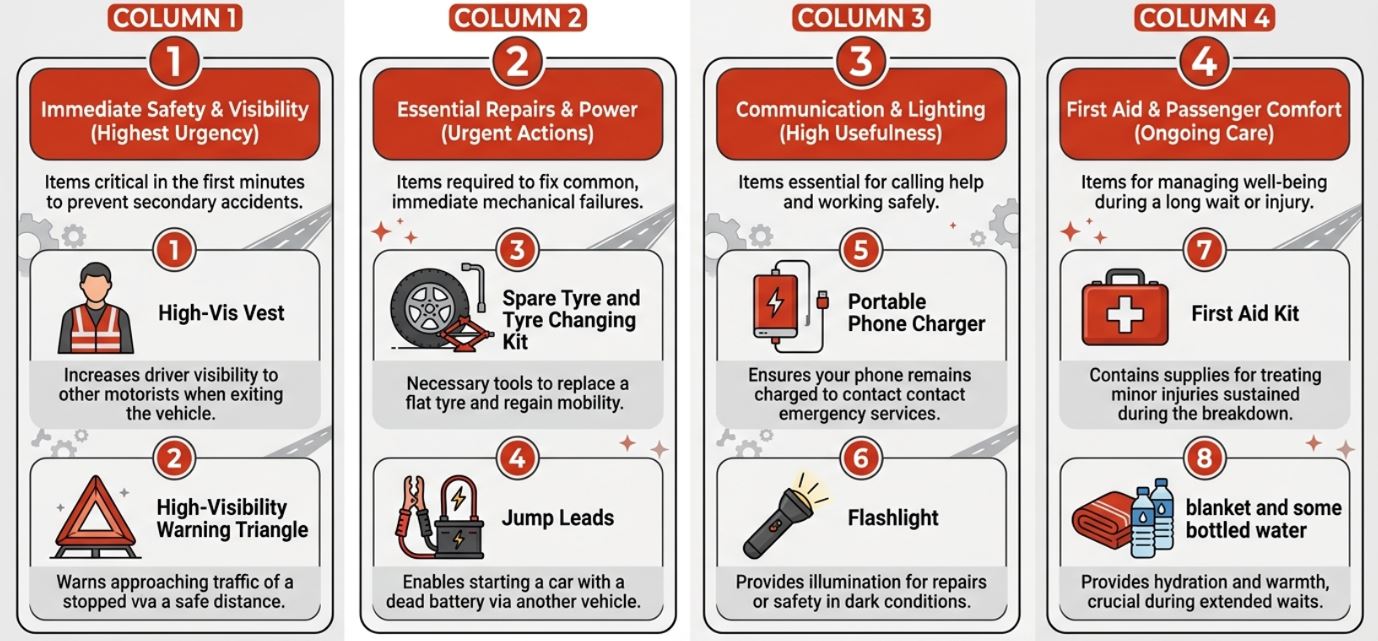
High-Visibility Warning Triangle
High-Vis Vest
Flashlight
Portable Phone Charger
First Aid Kit
Spare Tyre and Tyre Changing Kit
Jump Leads
Blanket and Bottled Water
Sand and Shovel
Emergency Radio
1. High-Visibility Warning Triangle
These reflective orange triangles are critical for establishing advanced warning zones during emergency or roadside breakdown scenarios. By placing them approximately 100–200 feet behind your disabled vehicle (depending on road speed and visibility), you provide oncoming motorists with crucial reaction time.
This active signaling exponentially reduces the risk of secondary rear-end collisions, particularly on high-speed highways or in low-light conditions, by alerting traffic to an obstruction well before they reach your position.
2. High-Vis Vest
This fluorescent, retro-reflective garment maximizes your personal visibility to high-speed traffic when you are forced to exit your vehicle on the roadside shoulder. Wearing a High-Vis vest ensures you are seen by oncoming drivers from a significantly greater distance, protecting you while you deploy warning triangles, check a tire, or await emergency assistance.
3. Flashlight
A durable, high-lumen Flashlight (preferably LED) is essential for diagnostic illumination and signaling after dark. It allows you to safely inspect mechanical components under the hood, locate tire changing tools, change a spare, or signal your location to rescue personnel during nocturnal or low-visibility weather events.
4. Portable Phone Charger
A fully charged Portable Phone Charger (power bank) prevents complete communication failure during an emergency. Maintaining mobile device battery life is mandatory for contacting emergency dispatch (911), towing services, or roadside assistance providers, ensuring you can transmit your precise location coordinates and receive updates on assistance ETA.
5. First Aid Kit
A comprehensive First Aid Kit provides immediate medical response capabilities for minor injuries sustained during a breakdown event or subsequent to a minor collision. It allows you to stabilize cuts, scrapes, or minor burns while waiting for professional medical personnel to arrive on the scene.
6. Spare Tyre, Jack & Changing Kit
This kit—including a properly inflated spare tire, hydraulic or scissor jack, and lug wrench—offers the only solution for immediately resolving a flat tire without professional intervention. Having these functional components allows you to rapidly change the tire and safely drive to a repair facility, minimizing roadside exposure time.
7. Jump Leads
A set of heavy-duty Jump Leads (jumper cables) provides a zero-cost solution for resolving a discharged or "dead" battery by transferring power from a donor vehicle. This tool can instantly restore engine cranking ability, allowing you to drive home or to a mechanic without needing a tow truck.
8. Blanket & Bottled Water (If Winter Season)
These items provide essential sustenance and environmental protection during extended wait times for roadside assistance. A heavy blanket prevents hypothermia during cold-weather breakdowns when engine heat is unavailable, while bottled water ensures hydration, particularly during high-temperature summer vehicle stalls in South Florida.
9. Sand & Shovel
A small, collapsible Shovel and a bag of Sand (or kitty litter) are necessary traction aids for vehicles that become stuck in soft terrain. These tools allow you to dig out from mud or deep sand and apply a friction layer under the tires to regain momentum without needing a winch recovery.
10. Emergency Radio
An Emergency Radio (crank-powered or battery-operated, with NOAA weather alerts) provides critical information flow when cell towers are down or mobile devices fail. It ensures you receive weather updates, disaster alerts, or emergency instructions during widespread power outages, severe storms, or hurricanes.
What to Do If Your Car Breaks Down On A Busy Road or Highway?
Follow the tips below to safely handle your car if it breaks down on a busy road or highway.
Tip 1: Stay Calm – Keep your composure to make clear, safe decisions.
Tip 2: Activate Hazard Lights – Immediately turn on your hazard lights to signal oncoming traffic that your vehicle is disabled.
Tip 3: Reduce Speed Gradually – Avoid harsh braking; coast or brake gently as you prepare to move over.
Tip 4: Exit the Travel Lane – Signal and carefully merge across traffic lanes to clear the active roadways.
Tip 5: Pull Away from Main Road – Move as far onto the right shoulder as possible, or coast down an exit ramp into a safe area.
Tip 6: Use Road Flares or Reflective Triangles – Set up reflective triangles or flares behind your car at set distances to alert approaching drivers.
Tip 7: Call for Help – Contact emergency services, roadside assistance, or a local towing company to arrange dispatch and vehicle recovery.
What to Do While Waiting for the Roadside Assistance to Arrive If A Vehicle Breakdown Occurs?
When your vehicle breaks down, waiting for roadside assistance requires following a few critical safety measures to protect yourself and ensure help reaches you quickly; the necessary steps to follow while waiting are listed below.
Pull Your Vehicle to Safety: Maneuver your vehicle as far onto the right shoulder or off the active roadway as possible to avoid obstructing traffic.
Make Your Vehicle Visible to Others: Turn on your hazard lights and place reflective warning triangles or flares behind your car so oncoming drivers can spot you from a distance.
Share Exact Locations With Dispatcher: Provide the dispatch operator with precise landmarks, highway mile markers, or GPS pin drops to help the tow driver locate you without delay.
Keep Your Phone Turned On: Make sure there is enough battery left in your phone so dispatcher can call you with arrival updates or location clarifications.
Frequently Asked Questions
How often should you inspect and replace items in your car emergency kit?
You should audit supplies every 6 months to replace expired medications, recharge portable power banks, check bottled water dates, and verify spare tire air pressure.
Can jump leads damage a modern car’s electronic system?
Can jump leads damage a modern car’s electronic system depends on connection accuracy: improper jumper cable sequences create high-voltage surges that damage sensitive Engine Control Units (ECUs) and onboard electronics unless connected strictly to an unpainted metal ground point.
Baptiste Towing & Transport provides 24/7 towing, flatbed transport, vehicle recovery, and roadside assistance across Broward, Miami-Dade, and Palm Beach Counties.
COMPANY
FOLLOW US
© 2026. Baptiste Towing and Transport LLC. All Rights Reserved.