
How to Deal With A Car That Won't Start After Sitting Unused For Days
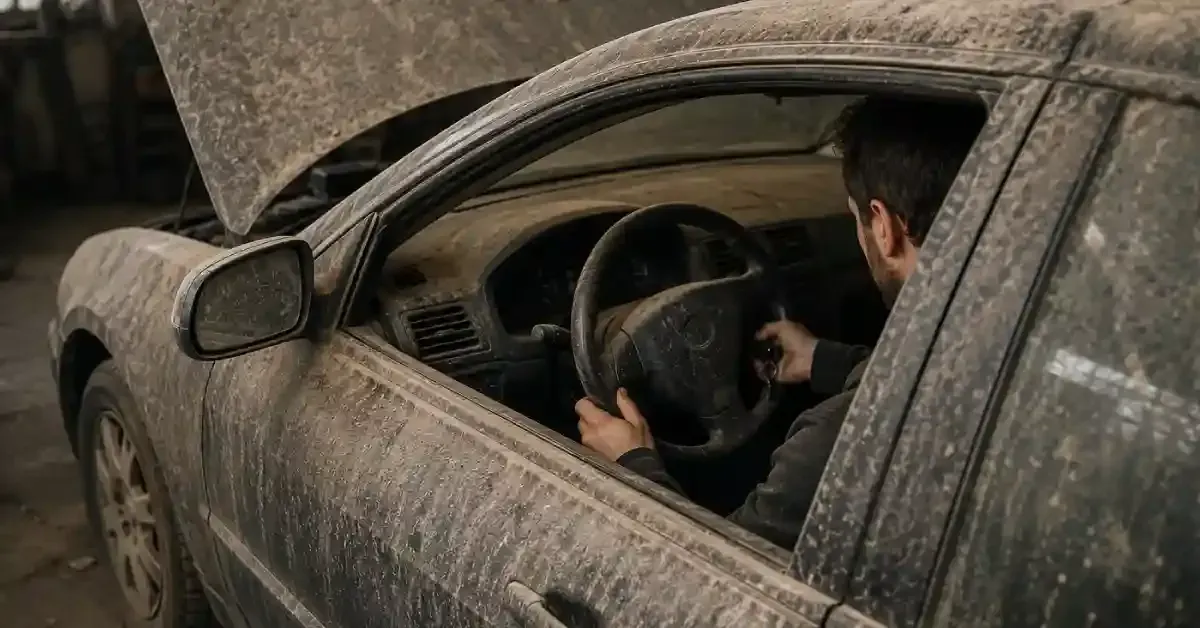
Leaving a vehicle parked for weeks, months, or years inevitably causes mechanical degradation. Parasitic electrical drain empties the battery, gasoline oxidizes into a sticky varnish, and rodents frequently nest inside warm engine bays. Before turning the ignition key on an idle vehicle, you must follow a systematic diagnostic process. Forcing an engine to crank without proper checks can turn a simple fix into severe internal mechanical damage or an electrical fire. Follow this step-by-step diagnostic guide to safely assess, revive, and start a car that has been sitting unused.
Why a Car Does Not Start After Sitting Idle for a Long Time?
One of the main reasons why a car won't start sitting idle for a long time is due to a dead battery. When a vehicle sits unused for a long time, static components and stagnant fluids undergo chemical degradation, oxidation, and mechanical seizure. Beyond a dead battery, there are multiple reasons that might prevent a car from starting, these are:
Dead Car Battery
Seized Starter Motor
Clogged Fuel Injectors
Seized Electric Fuel Pump
Blocked Fuel Filter
Rusted Piston Rings
Dried-Out Engine Seals
Damaged Wiring Harness
How to Revive A Car Sitting Idle For Long Time?
Follow the steps below to revive a car sitting idle for days, weeks, or months:
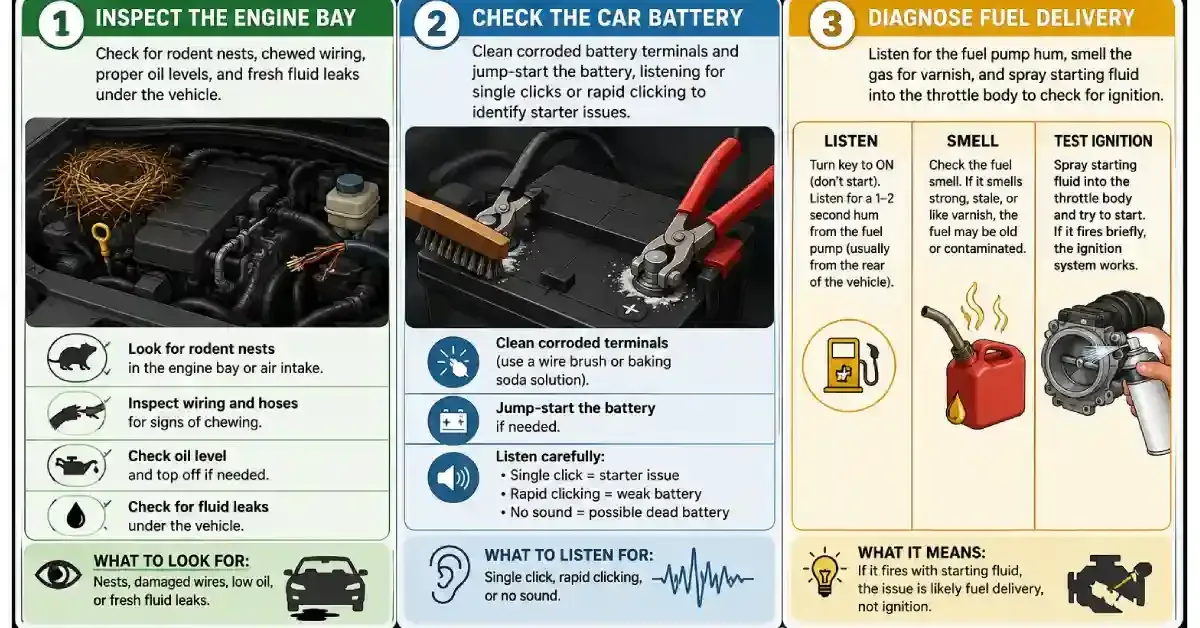
Inspect the Engine Bay: Check for rodent nests, chewed wiring, proper oil levels, and fresh fluid leaks under the vehicle.
Check the Car Battery: Clean corroded battery terminals and jump-start the battery, listening for single clicks or rapid clicking to identify starter issues.
Diagnose Fuel Delivery: Listen for the fuel pump hum, smell the gas for varnish, and spray starting fluid into the throttle body to check for ignition.
Step 1: Inspect the Engine Bay
Pop the hood and inspect the air intake box, engine cover, and battery tray. Rodents commonly nest in quiet engine bays, packing them with leaves, acorns, and insulation that can be sucked into the engine or catch fire on hot exhaust components.
Check visible wiring harnesses for chewed, cracked, or frayed insulation. Soy-based wire coating on modern vehicles is a major target for rodents.
Pull the oil dipstick to check for proper level and consistency. If the oil appears milky or light brown, coolant has leaked into the oil pan via a failed gasket. Check coolant reservoir levels and transmission fluid as well.
Safety Warning: If you detect chewed main wiring harnesses down to exposed copper or observe active liquid fuel dripping onto the engine block, do not attempt to start the vehicle . Attempting ignition creates an immediate fire hazard. Transporting the vehicle via flatbed to a certified repair facility is the necessary safety protocol.
Step 2: Check the Car Battery
A completely discharged or degraded power system is the single most common reason a car fails to start after prolonged time. Lead-acid batteries sulphate and leak acid when left uncharged. Remove heavy white or greenish crust from the positive and negative posts using a wire brush and a mixture of baking soda and water.
Once the battery terminals are cleaned, it's time to jump start your car battery. Connect the red positive (+) cable to the dead battery's positive terminal, then to the booster source's positive terminal. Connect the black negative (-) cable to the booster source's negative post, and clamp the final negative end to an unpainted metal surface on the dead car's engine block (not the negative battery post).
Allow the donor vehicle or jump pack to charge the dead battery for 3 to 5 minutes before attempting a start.
Turn the key. Once the engine starts, leave it running continuously for at least 30 minutes to allow the alternator to replenish the battery's charge.
If the battery fails to hold a jump, or if the car is trapped inside a tight garage structure where another vehicle cannot reach, calling for professional roadside jump-start services.
Step 3: Diagnose Fuel Delivery
Gasoline is a volatile mixture of organic compounds that begin to break down and evaporate after 30 to 60 days. As ethanol absorbs moisture from the air, it causes phase separation, forming an acidic, gummy varnish that clogs fuel injectors, filters, and lines.
Turn the ignition key to the "ON" position (without cranking). Listen closely near the rear seats or fuel tank for a 2-second electric humming sound. No sound indicates a blown fuel pump fuse, relay issue, or dead fuel pump.
Open the fuel cap and smell the tank intake. Fresh gas smells sharp and chemical; degraded, oxidized gas smells sour, heavy, and similar to varnish or kerosene. Replace the old stale fuel with old gas with fresh fuel.
If the engine briefly stumbles to life and dies, your ignition system is working, but fuel is not reaching the cylinders (clogged filter, bad fuel pump, or dead injectors).
Important Note: Manual fuel siphoning on modern vehicles risks damaging internal anti-siphon check valves or spilling dangerous hydrocarbons. Scheduling a flatbed towing service to move the vehicle to a qualified service center allows the fuel tank to be safely drained and flushed.
What Steps Should You Take Based on How Long the Car Sat Idle?
The duration of inactivity determines how deep your recovery process must go. Table below highlights different time frames, possible causes, and solutions.
| Idle Duration | Primary Cause | Possible Solution |
|---|---|---|
| Car sitting idle for 1 month | Minor parasitic battery drain and temporary tire flat-spotting. |
|
| Car sitting idle for 3 months | Deep battery discharge and initial fuel volatility loss in the tank. |
|
| Car sitting idle for 6 months | Battery sulfation, ethanol phase separation, and light varnish in fuel lines. |
|
| Car sitting idle for 1 year | Oxidized varnish clogging fuel injectors, dry engine seals, and severe battery death. |
|
| Car sitting idle for 2 years | Stale gas turned to heavy gum, dry cylinder walls, and sticking brake calipers. |
|
| Car sitting idle for 3 years | Severe internal cylinder rust/seizure, degraded fluids, and rotted rubber hoses/tires. |
|
FAQs
Can a car battery die completely after sitting unused for one month?
Yes. Modern vehicles maintain active ECU memory, alarm systems, and keyless entry receivers that continuously pull a small current (parasitic drain). In 3 to 4 weeks, this draw—combined with natural self-discharge—can lower battery voltage below the threshold required to turn the starter motor.
Is it safe starting a car with stale gas in the tank?
If the gas is only 2 to 3 months old, mixing it with fresh fuel is generally safe. However, if the gas has sat for over 6 months, forcing dark, oxidized fuel through high-pressure fuel pumps and precision fuel injectors can clog the nozzles, freeze pump impellers, and damage catalytic converters.
Is drained battery the main reason behind car not starting after a long time?
Yes, in most cases, a drained or dead car battery is one of the main reasons your car does not start after sitting idle for a prolonged period. Modern vehicles continuously draw a small amount of electrical current (parasitic drain) for computers, clocks, and security systems, which flattens a standard 12-volt battery over several weeks or months.
Baptiste Towing & Transport provides 24/7 towing, flatbed transport, vehicle recovery, and roadside assistance across Broward, Miami-Dade, and Palm Beach Counties.
COMPANY
FOLLOW US


© 2026. Baptiste Towing and Transport LLC. All Rights Reserved.